Object Edge // Sayya
The agent harness on top of your company brain.
Hive holds what your company knows. Sayya is what works in it — the surface people ask questions through, and the layer that decides which tools to reach for and which model should do the reasoning. It is deliberately not welded to a provider.
Model Routing
Hive is the constant. The model in front of it is the variable.
This is the part only the harness does. Four routing paths are supported, and organizations commonly use more than one at once.
Sayya routes through the agreement you already signed.
Microsoft, OpenAI, or Anthropic enterprise keys. Your negotiated rate, your committed tokens, and — the part procurement actually asks about — your own data-retention terms, unchanged.
Multiple providers, nothing to negotiate.
Object Edge keys across Anthropic, OpenAI, and Fireworks. One line item, no second model contract to put through procurement.
Models running where you require them to run.
Self-hosted or dedicated inference for environments where model traffic cannot cross a controlled boundary.
Different work, different models, same context.
Route fast extraction to a cheap tier, deep synthesis to a frontier model, and post-conversation reflection to something cheaper again. The context underneath does not move.
Capability Surface
What Sayya does once the company brain is in place.
Built for real operating rhythms: daily planning, revenue workflow, task tracking, decision capture, follow-up management, and cross-functional intelligence requests.
Start the day with priorities, blockers, and decisions waiting for input.
Sayya synthesizes overnight communications, open commitments, initiative risk, and pending follow-ups into one briefing before the first meeting starts.
Ask the business a question in plain language and get a sourced answer.
Status checks, ownership questions, deal exposure, initiative progress, open risks, and historical decisions all resolve against the company brain instead of disconnected search results.
Capture deal context without asking reps to become data clerks.
Sayya can create opportunities, log activities, update stages, and enrich account records from conversations and follow-ups rather than relying on delayed manual entry.
Turn conversations into assigned work and durable records.
It creates tasks, logs decisions with trade-offs, links work to initiatives, and keeps the operating record current as discussions turn into action.
Watch for changes that matter without asking humans to poll systems.
Sayya can monitor inboxes, KPIs, deadlines, deal transitions, and workflow triggers on a schedule, then notify or act based on the guardrails you set.
The same agent follows you across web, chat, and mobile touchpoints.
Web interface, Telegram, Google Chat, and workflow notifications let teams use the same organizational context wherever they already spend time.
Draft output that reflects what is actually happening in the business.
Meeting agendas, follow-up emails, status reports, and strategy documents pull from the live company brain instead of relying on templates and memory.
Keep playbooks, learnings, and precedent accessible after people move on.
Ask how a negotiation was handled, what worked in a prior launch, or which pattern solved a similar issue before, and Sayya can retrieve the context behind the answer.
The Agent Pattern, On Film
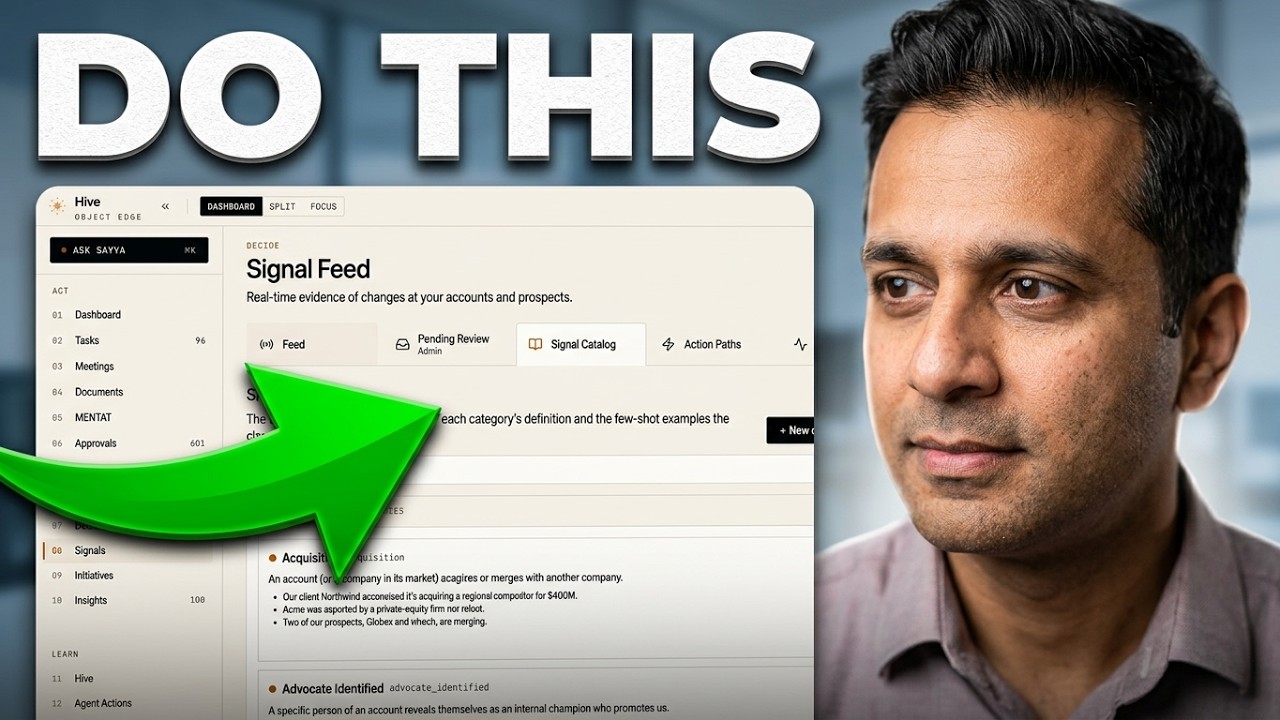
Watch the loop: grounded context, drafted action, human approval.
Mentat is this agent pattern applied to marketing. It reads the relationship graph Hive builds from inboxes, LinkedIn, and call notes, ranks the warm paths worth pursuing, and drafts the outbound — then an AE approves or edits every send, and the system learns from each one.
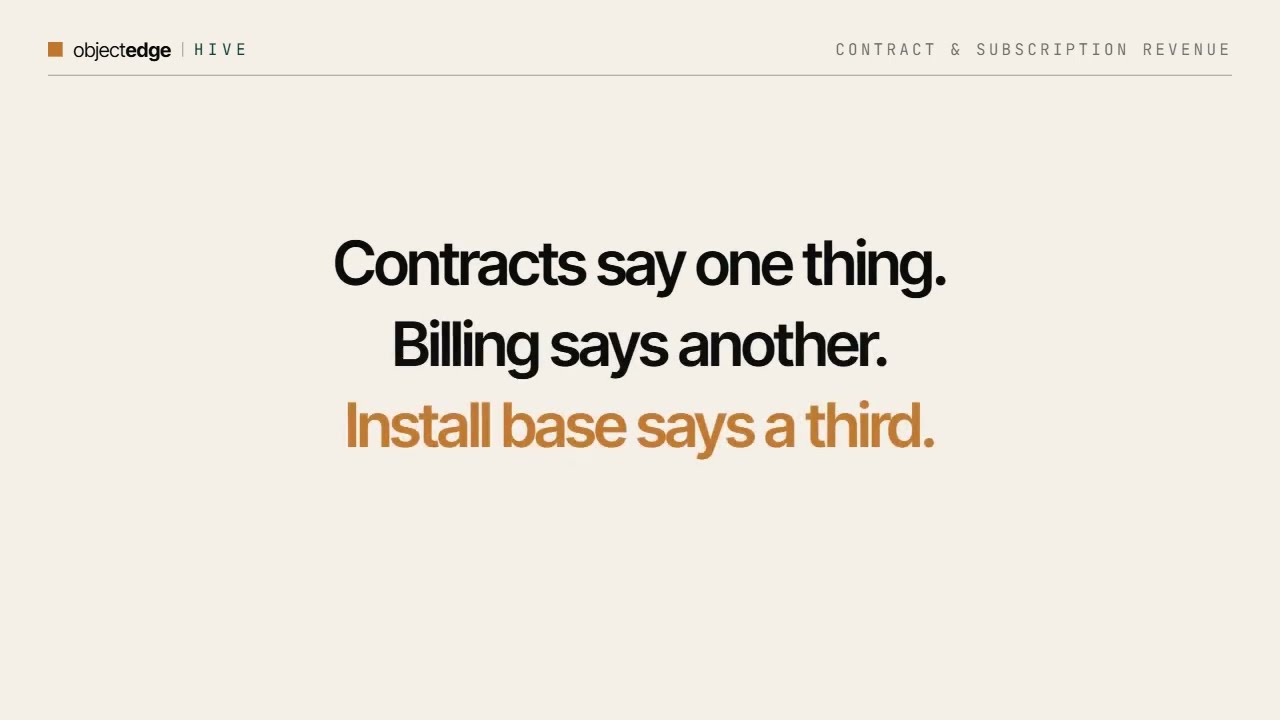
The same loop in other operations
Memory Architecture
Three layers of memory keep the agent grounded over time.
The current interaction, the patterns learned from prior work, and the company brain all contribute to how Sayya reasons. That is the difference between a chat session and a durable enterprise agent.
The live state of the current conversation.
What has been asked, what has been found, which actions are in motion, and which context windows matter right now.
Persistent patterns, preferences, and validated learnings.
Per-user and per-organization memory stores what Sayya has learned about communication style, playbooks, successful workflows, and recurring context.
Hive’s knowledge graph as the organizational ground truth.
Entities, relationships, temporal history, embeddings, and provenance let Sayya query what the business knows before it broadens the search.
Learning Loop
Every conversation should make the system more useful.
Sayya reflects after interactions and stores explicit observations instead of relying on vague personalization. That keeps learning inspectable, portable, and tied to real operating behavior.
Explicit feedback becomes durable guidance.
When a user says no, not that way, Sayya records the preferred path and uses it as a future constraint instead of relearning the same lesson repeatedly.
It adapts to how each user wants information delivered.
Length, format, channel, tone, rounding rules, and escalation preferences become part of the working profile rather than hidden in habit.
Company-specific language stops being a translation problem.
Whether your team says campaign, initiative, deck, queue, territory, or port call, Sayya learns the ontology and applies it consistently in reasoning and writing.
Successful action paths shape the next response.
If a company-brain query consistently answers account questions better than a broad file search, Sayya adjusts its orchestration strategy accordingly.
Safety and Control
Autonomous does not mean unsupervised.
Trust is configurable. Teams decide which actions remain advisory, which need confirmation, and which routine workflows can run on their own. Every action is logged, traceable, and reversible.
Inform
Sayya surfaces insights, risks, and next steps while a human stays fully responsible for taking action.
Suggest and confirm
Sayya drafts the email, proposes the task, or prepares the CRM change, then waits for an explicit approval before it executes.
Act with notification
Trusted low-risk workflows can execute automatically while the user receives a notification and retains the ability to reverse the action.
Full autonomy inside guardrails
Routine briefings, monitoring, and defined follow-up workflows can run independently within domain, user, and action-specific boundaries.
Against a General-Purpose Assistant
Three differences that a better model does not close.
The fuller version of this argument, including speed and cost at scale, is on Hive for Teams.
Does the agent stop at the ecosystem boundary?
Assistants are quick inside their own vendor’s suite and awkward outside it. Reaching a CRM or a tracker means extra tooling, and the work of moving context between surfaces lands back on the person.
Sayya works across workspace, CRM, ticketing, files, and custom APIs through one context, and follows that context across web, chat, and mobile. Nothing has to be carried between surfaces by hand.
Does last week’s correction survive?
Stateless assistants reset. The preference you stated, the format you asked for, and the correction you made are gone by the next session, so you teach the same lesson repeatedly.
Corrections, preferences, vocabulary, and successful tool paths persist as durable, inspectable guidance — and they persist for the organization, not just for the person who taught them.
Who decides which model runs your workflows?
An ecosystem assistant is that vendor’s models on that vendor’s schedule. When a better model ships elsewhere, the work built around the old one does not come with you.
Sayya is model-agnostic by design. Plug in any model, route different tiers to different providers, and swap them as the market moves. Your context, memory, and workflows stay where they are.
What is an agentic harness?
An agentic harness is the layer between a person and a set of AI models that decides which tools to use, which model should reason about a given request, and how results are assembled. Sayya is Object Edge’s harness, and it runs on top of Hive’s company brain.
Is Sayya tied to a specific AI model?
No. Sayya is model-agnostic by design. It routes through your own Microsoft, OpenAI, or Anthropic enterprise agreement, through Object Edge provider keys, or through hosted models, and different queries can route to different providers.
Can we use Sayya without Hive?
Sayya is built to reason over a company brain, so it is deployed with Hive. The reverse is possible — an external assistant can query Hive directly — but it gives up the orchestration, persistent memory, and action paths the harness provides.
How does Sayya remember things?
Three layers. Working memory holds the live conversation. Episodic memory stores validated preferences, corrections, and playbooks per user and per organization. Semantic memory is Hive’s knowledge graph, the organizational ground truth.
Can Sayya take actions, or only answer questions?
It can act, at a level of autonomy you configure per workflow: inform only, suggest and wait for approval, act and notify, or run independently inside defined guardrails. Every action is logged and reversible.
Where Sayya Shows Up
One agent layer, every way Hive is bought.
The company brain that makes Sayya useful.
Semantic layer + memory + provenance
Hive for TeamsOne company brain underneath every AI seat you have deployed.
$25 / user / month
Hive for EnterpriseAgents working one named problem, on a fixed bid.
Live in four to eight weeks
ArchitectureThe semantic layer, the knowledge graph, and the governance controls.
SOC 2 · deploys in your cloud
The Foundation
Sayya is only as strong as the company brain underneath it.
Hive is the layer that gives Sayya grounded retrieval, context, and history. Start there.
See Sayya in the context of your workflow
Tell us where the friction is — executive reporting, CRM hygiene, task follow-through, or cross-system intelligence — and we’ll show you how Sayya would fit.