experience-design
How to Help Consumers with Your Product Page Design

Shopping online is all about convenience, especially for people who prefer to avoid brick-and-mortar stores or love deal-hunting.
Unfortunately, it also involves a lot of guesswork. Consider the fashion industry: sizing, fit, comfort, material, and quality are just some of the factors that consumers have to weigh. It can be far more challenging for potential customers to navigate this online than in-person, where they can try on clothing to fully appreciate how it fits and feels.
So how do customers make a decision to purchase products or services online, and what process do customers go through before finally purchasing? Your site's user experience and design can greatly help make this processes smoother, faster, and easier.
Product Page Design
A good product page design is comprised of a few key elements. Each of these elements goes a long way in assisting customers to gather information, make a decision, and improve the overall user experience for customers, thus ensuring customer satisfaction.
1. Good Product Images
A good product image should sell the item on its own. The more effort placed into delivering stunning images, the more it will help the user make an informed decision about their purchase.
In person, we have the opportunity to physically touch items, examine the quality, see fine details, etc. That interaction is lost during an eCommerce purchase, and so it’s important to utilize technology to fill in the gaps of the online buying experience. Find ways to simulate those interactive elements without the actual physical evaluation of a product.
For example, consider including zoom-in capabilities, so that customers can see larger, more detailed views of items. 360-degree views are also helpful, enabling the customer to view the product in its entirety.
Another strategy is to model the products on a person so that potential customers can view themselves using it. Be sure to use diverse, inclusive models: differing body types, heights, skin tones, etc. so that everyone is able to imagine themselves with your products, especially if you sell fashion or beauty items.
2. Robust Product Reviews & Ratings
Consumers seek external information from friends, reviews, and information presented to them by the interface. Robust reviews are highly important, and influential. A 2017 report found that 93% of consumers said that online reviews impacted their purchasing decision.
Reviews and ratings aid buyers in making faster decisions, with less buyer’s remorse, minimizing the likelihood of returns.
Transparent reviews and ratings can also eliminate buyer frustration, dissatisfaction, and other negative feedback. They’re able to know exactly what they’re getting before making their purchasing decision.
Keep in mind that robust product reviews that inform users on critical things such as sizing, fit, etc., not only help the buyer make satisfactory purchases but also help a satisfied buyer inform the next possible purchaser.
This ultimately becomes a cyclical experience – the more a user leaves a review, the more likely the next user is to make an accurate buying decision, who in turn will leave a review, and so forth.
3. Dimensions, Measurements, Materials
In 2014, we conducted a research study on the Fashion Sharing Economy. Participants informed us that the materials and dimensions of a product were a deal-breaker in their online buying experience.
If clothing had a certain percentage of a particular material, the user could gauge whether or not the item would fit them. For example, if a shirt has enough stretch, it’s possible for a user to get away with buying a medium instead of a large.
Consequently, it’s important to include adequate product measurements and even include the model’s body measurements. This enables potential customers to accurately picture themselves in the items, ensuring customer satisfaction and speeding up the decision-making process.
In Conclusion
Take the time to evaluate your product pages and see if you are offering robust, appropriate information to your potential customers. The primary challenge in eCommerce design is ensuring the interface provides enough detail to the consumer and accurately depicts the item online as it will in person.
These design starting points will improve the user’s online shopping experience, but they’re only the beginning. It’s important to think about how emerging technologies can fill in the gaps of online experience, specifically with sizing and fit. The issue of how products fit will always be a challenge when online shopping, and embracing new developments in eCommerce design will continually improve the process.
To that point, all of these interface enhancements need to be designed with multi-platform browsing in mind. No longer is it sufficient to have interfaces that function well on desktops, but not mobile or other devices.
In Q1 2019, smartphones accounted for 65% of all retail site visits worldwide, per Statista. Mobile is now the preferred device for browsing online, with desktop accounting for only 30% of online retail visits. As voice ordering and other technologies emerge, the purchase pathway becomes increasingly complex.
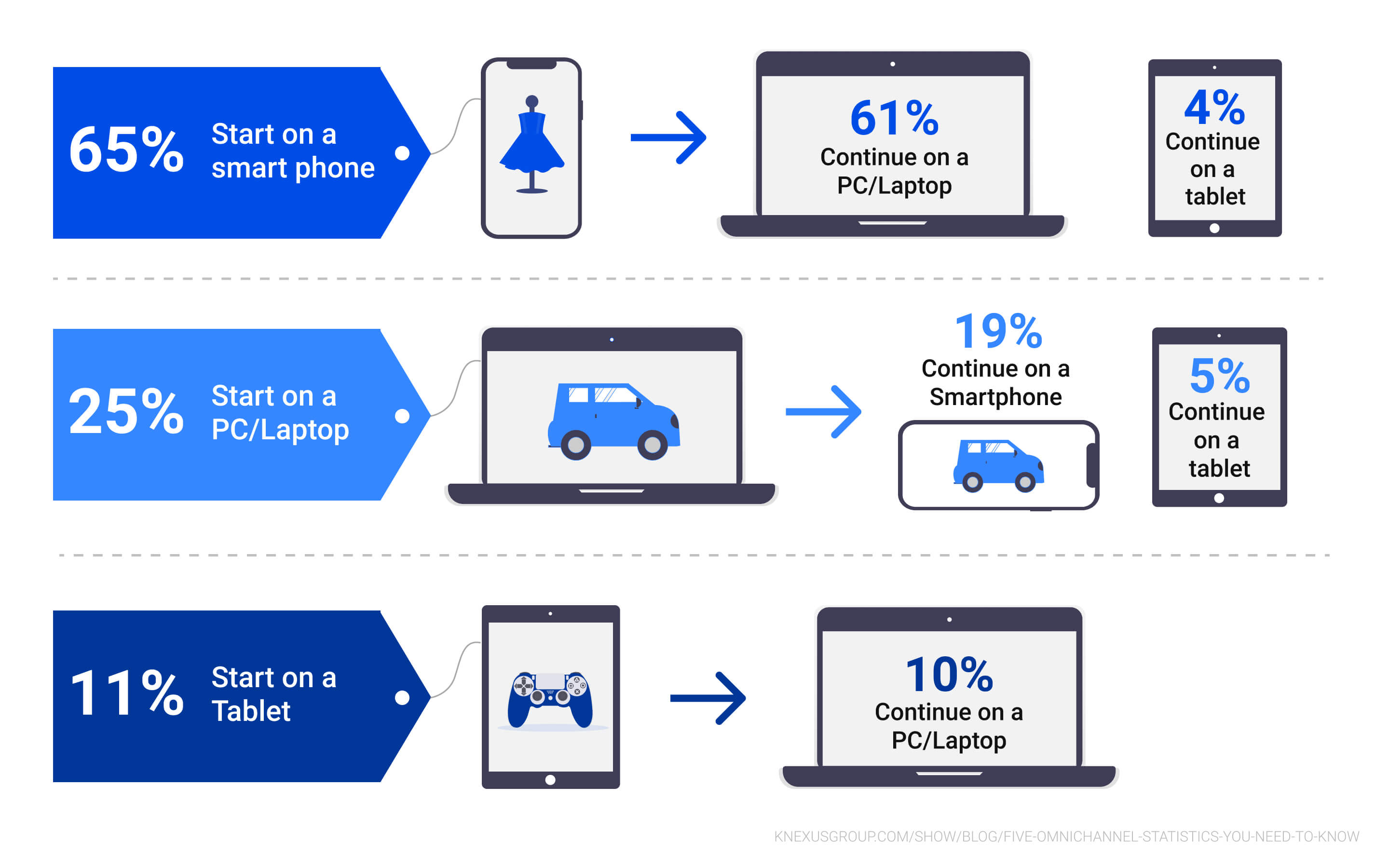
Interfaces that function across platforms and provide robust information to customers will help eCommerce companies convert more customers who are purchasing more products and are more likely to evangelize your brand to their friends and family.
Related articles
-

experience-design
Strategic Approach to Rolling Out a Design System
As the world of UX continues to evolve, the demand for scalable digital experiences with a fast turnaround also increases.
-

experience-design
Creating a Multibrand Design System
A multibrand design system lowers costs and unifies design resulting in a better user experience for both customers and team members.
-

experience-design
Getting Your Product Team Ready for A Design System
Discover essential components and collaboration processes for successful Design System adoption. Support your teams in building efficient and cohesive products.