engineering
Why the Fastest Way to Reduce Release Friction Is Not Replacing Your Dev Tools

Most teams think release friction is a tooling problem.
If deployments feel slow, brittle, or overly manual, the instinct is usually the same: buy a new platform, standardize on a new toolchain, or replace the existing developer workflow with something “more modern.” But in many organizations, that is exactly the wrong move.
The fastest way to cut release friction is often not to replace your dev tools.
It is to remove the friction around them.
That distinction matters more than it sounds. Most engineering organizations already have reasonable tools in place: GitHub or GitLab for source control, CI runners, artifact repositories, cloud infrastructure, Kubernetes, feature flags, observability, ticketing, and incident management. The problem is rarely that one of those tools is fundamentally bad. The problem is that the workflow across those tools has become fragmented, inconsistent, and overly dependent on human coordination.
In other words, release friction is usually a systems problem, not a tools problem.
Why “tool replacement” feels attractive
Replacing tools promises a clean reset. Teams imagine fewer integrations, a modern interface, and a single source of truth. In practice, though, swapping tools is expensive and disruptive:
- Engineers need to learn a new workflow
- Existing automations break or need to be rebuilt
- Security and compliance processes must be revalidated
- Historical knowledge gets stranded in old systems
- Adoption is uneven, so teams end up supporting both old and new paths
And even when the migration succeeds, the organization often discovers something inconvenient: the friction did not disappear. It simply moved.
A new platform does not automatically fix:
- manual approvals
- inconsistent branching rules
- flaky test gating
- environment drift
- broken release handoffs
- unclear ownership
- missing deployment context
- slow incident response after releases
Those issues are usually rooted in process design, not product selection.
Where release friction actually lives
If you want to reduce release friction without replacing dev tools, look at the handoffs.
Most delivery pipelines break down in a few predictable places:
1. Too much manual decision-making
If releases depend on Slack messages, tribal knowledge, or one person who “knows the process,” you have a bottleneck. Manual review may be necessary in some cases, but it should be reserved for risk-based exceptions, not the default path.
2. Inconsistent definitions of “ready”
One team considers a pull request ready when tests pass. Another wants a security scan. Another waits for product sign-off. Another needs a release manager to verify the changelog. When readiness is not codified, every release becomes a negotiation.
3. Fragmented context
Developers, QA, security, operations, and product often work from different systems. If release metadata is scattered, teams spend time chasing information instead of shipping code.
4. Poorly automated checks
Some teams have “automation” that is really just a long list of scripts run by a person. That does not scale. It also introduces inconsistency, because humans inevitably miss steps under pressure.
5. Release anxiety
When deployments feel risky, teams slow down. They batch changes, avoid frequent releases, and add extra approval layers. The result is a release process that grows heavier precisely because it is fragile.
A better approach: automate the path, not the platform
Instead of replacing tools, make the existing path easier to traverse.
That means using orchestration, policy, and AI-assisted automation to reduce the number of decisions humans need to make during a release. The goal is to turn release delivery from an artisanal activity into a repeatable system.
Here’s what that looks like in practice.
Standardize release readiness
Create a shared release checklist that is machine-readable wherever possible. For example:
- all required tests passed
- security scan completed
- dependencies approved
- release notes generated
- rollback plan available
- environment health verified
If your tools support status checks, use them. If they do not, build lightweight automation around them. The point is not to add bureaucracy. The point is to make the “ready to release” state unambiguous.
Reduce human handoffs
Every time a release changes hands, latency increases. Ask whether each handoff is actually needed.
Can a CI pipeline automatically trigger the deployment after tests and policy checks pass?
Can a release manager approve only exceptions rather than every release?
Can QA sign off through automated evidence rather than a manual meeting?
If the answer is yes, remove the handoff.
Use policy to replace tribal knowledge
One of the most valuable forms of automation is policy enforcement. If certain services require additional controls, encode those rules in the pipeline. If production changes require monitoring coverage, make that a release condition. If a particular class of change needs a staged rollout, automate the rollout strategy.
This is where SDLC automation becomes powerful: it creates consistency without forcing every team into a new developer experience.
Preserve the developer workflow
A major mistake teams make is optimizing for governance at the expense of developer velocity. If the release process requires developers to leave their normal environment, copy information into a separate portal, or memorize a new sequence of steps, adoption will suffer.
The better pattern is to meet developers where they already work:
- pull requests
- CI status checks
- chat notifications
- deployment dashboards
- issue trackers
- artifact metadata
If the release system can be triggered and observed from the existing workflow, friction drops dramatically.
What this looks like in the real world
Consider a company that releases a customer-facing service multiple times per week. Their current process includes:
- manual verification after merge
- a release manager who coordinates deploy windows
- QA sign-off in a separate spreadsheet
- security checks run only at the end of the cycle
- a production deployment that requires several chat-based approvals
The team is not necessarily under-tooled. It is over-dependent on human coordination.
Instead of replacing Git, CI, or Kubernetes, they can streamline the flow:
- Add automated test and security gates in CI
- Centralize release metadata in the pull request or pipeline
- Replace spreadsheet tracking with pipeline status
- Define policy-based approval thresholds
- Use progressive delivery for lower-risk changes
- Provide automated rollback and health checks after deploy
Now the release process becomes more consistent. Teams spend less time asking, “Who needs to approve this?” and more time asking, “What is the risk profile of this change?”
That is a much better question.
How AI fits in without becoming the main event
AI is not a replacement for engineering judgment. But it can reduce friction in the release process in ways that are immediately useful.
For example, AI can help:
- summarize changes for release notes
- identify missing deployment context
- suggest risk categories based on code patterns
- detect likely dependency or configuration issues
- route exceptions to the right approver
- surface anomalies in logs or post-deploy signals
Used well, AI becomes a release assistant, not a new platform to learn. It enhances the SDLC by reducing the amount of manual interpretation required at each step.
That matters because release friction is often caused by people having to do repetitive “translation work”:
- translating code changes into business impact
- translating test results into release confidence
- translating logs into actionable next steps
- translating team-specific rules into deployment behavior
AI can help automate those translations, especially when integrated into existing tools and workflows.
Practical steps to start this week
If your goal is to lower release friction without replacing your dev stack, start small:
-
Map the current release path
Document every step from merge to production. Include owners, approvals, wait times, and tools involved. -
Identify the top three bottlenecks
Look for the steps that create the most delay or the most rework. Focus on handoffs, not just scripts. -
Codify readiness rules
Turn the most common release requirements into automated checks or pipeline policies. -
Eliminate one manual approval
Pick a low-risk path and remove a human step by replacing it with an automated condition. -
Make release status visible
Ensure developers and operators can see what stage a release is in without asking someone in chat. -
Measure before and after
Track lead time, deployment frequency, rollback rate, and time spent waiting on approvals. You cannot improve what you do not measure.
The real goal: less ceremony, more confidence
A good release process does not feel heavy. It feels trustworthy.
Teams should not need a large amount of ceremony to feel safe shipping software. They need confidence that the right checks happen, the right people are involved only when necessary, and the system handles routine work automatically.
That is why replacing dev tools is often the wrong first move. The value is usually in making your existing ecosystem work better together. When you reduce release friction around the tools developers already use, you lower operational
Related articles
-

ai
Harvey's Margin Swing Is a Tokenomics Story, Not Only a Legal-AI Story
Harvey's gross margin went from about +50% to about -50% and back positive in 2026 as agent usage spiked on rented frontier models, then moved onto its own open-weight model. What that swing says about metered knowledge work, revenue concentration at Anthropic and OpenAI, and open weights as a cost-of-goods strategy.
-
ai
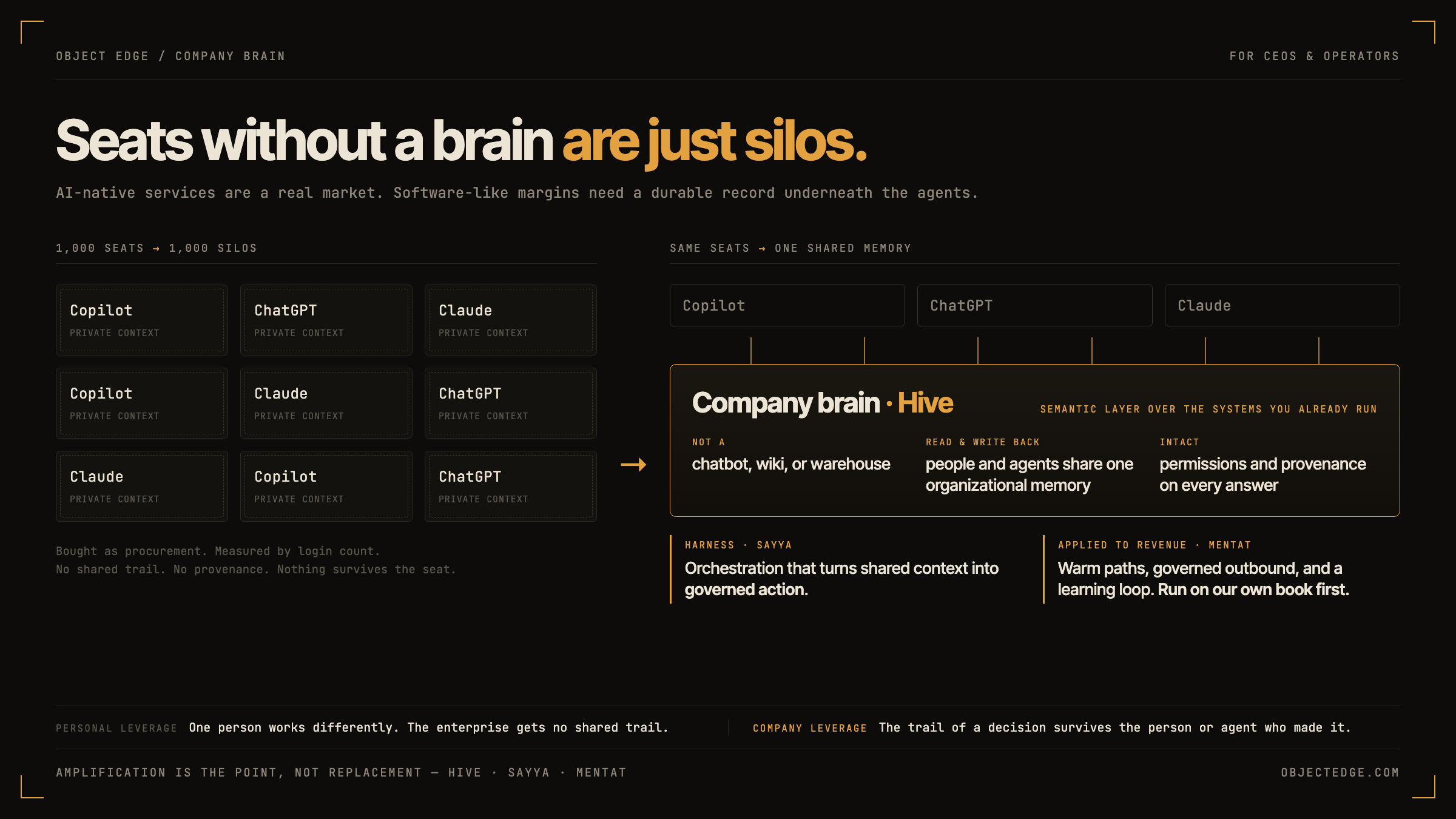
AI-Native Services Are a Real Market. Enterprise Still Needs a Company Brain.
Greg Isenberg's $100B AI-native services thesis is right about the market. The operator question is whether the enterprise keeps a durable record under its agents. Without one, a thousand AI seats become a thousand silos.
-
ai
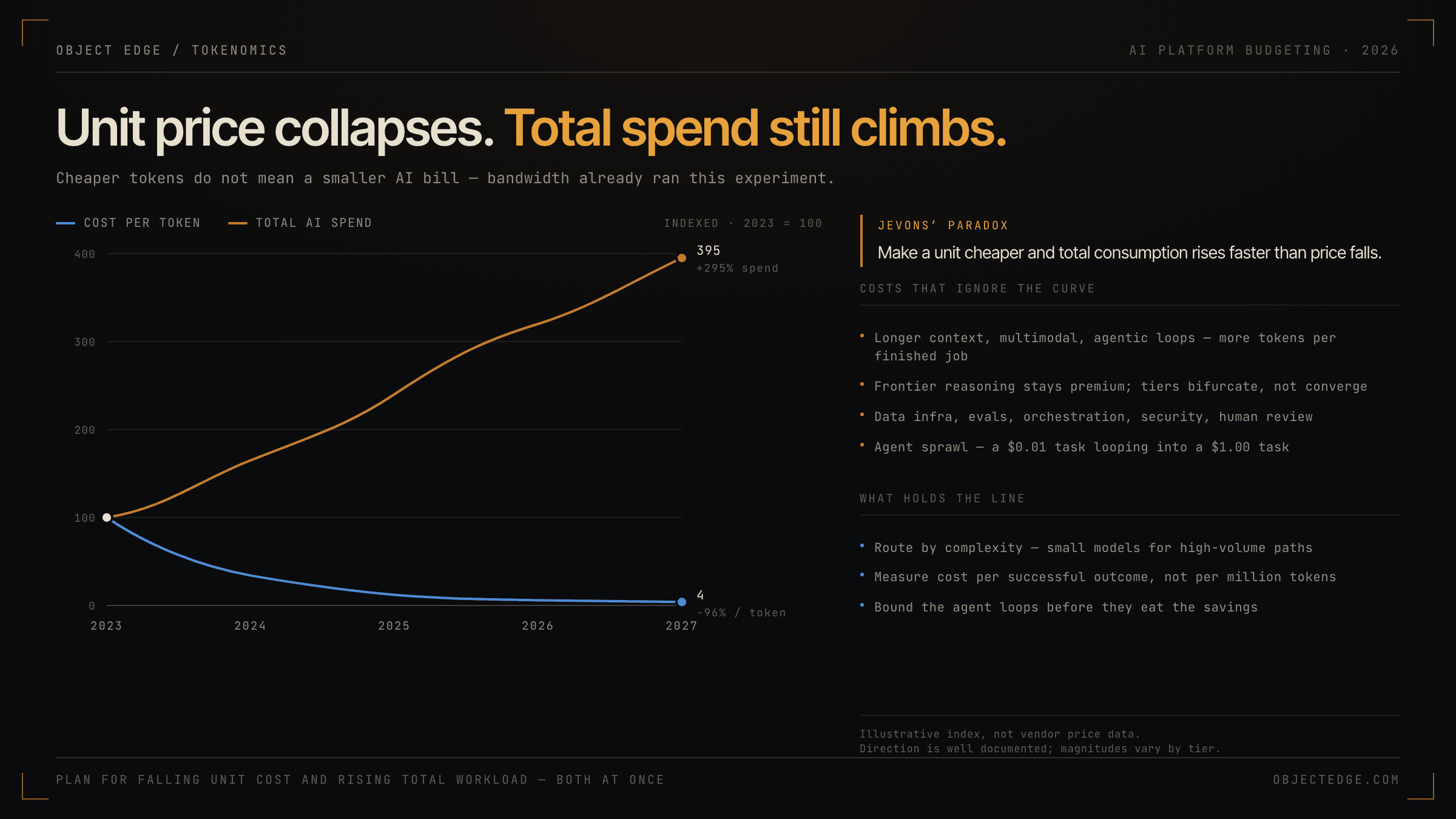
Faster, Cheaper Tokens — Why Your AI Bill Won't Fall Like You Think
LLM inference costs are collapsing along a curve that mirrors internet bandwidth pricing — but buyers who confuse cheaper tokens with lower total AI spend will get burned.