ai
Griffin's 'Video Turing Test' Is Less Interesting Than What We Do While the Demos Still Look Unfinished
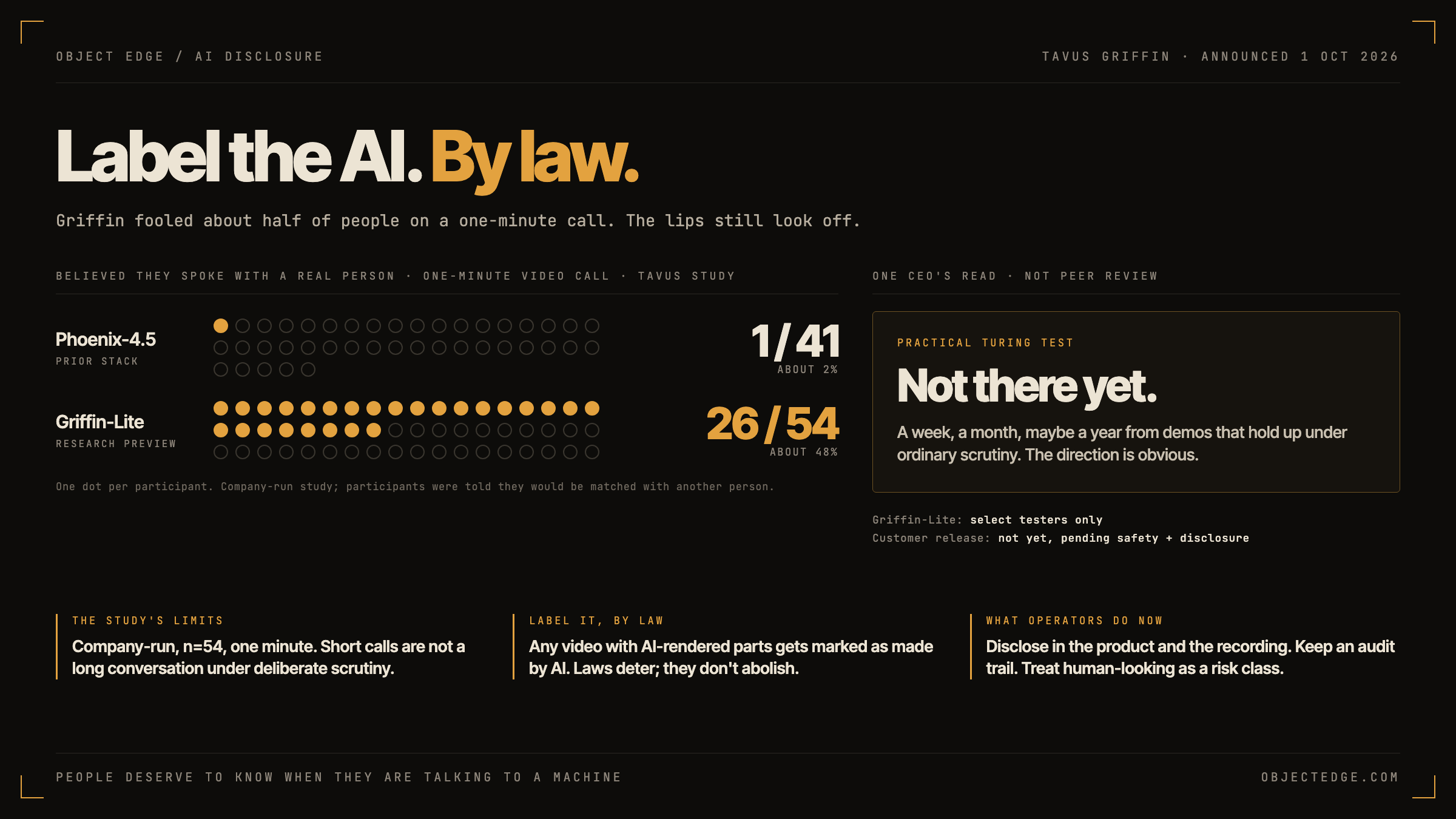
Tavus announced Griffin on 1 October 2026 as a Human Interaction Model for real-time face-to-face conversation. On their research page they report that in a live study, 26 of 54 participants, about 48%, believed after a one-minute video call that they had spoken with a real person, compared with 1 of 41, roughly 2%, on their prior Phoenix-4.5 stack. They call that a pass of a real-time video Turing test. Griffin-Lite is a research preview for select testers, not a general customer product, while they work on safety and disclosure.
I watched the videos. The lips still look off. On a practical basis, Griffin does not pass the Turing test as I understand it in daily life. We are not there yet. We are probably a week, a month, or maybe a year away from demos that hold up under ordinary scrutiny. The philosophical question is still the one that matters, because the destination is obvious even if this particular finish line is unfinished.
The philosophical point is settled; the practical one is not
It is obvious this is going to happen. Machines that look and sound like people on a call will keep getting better at timing, expression, and interruption. Arguing about whether the jump from 2% to 48% in a one-minute, company-run study is the “real” Turing test is less useful than admitting the direction of travel. Short calls with participants who were not told a machine might be on the other end are not the same as a long conversation under deliberate scrutiny. Tavus’s own materials are clear that the study is theirs, that n=54, and that the model is not yet shipping to customers. Fair enough. Progress can be real without the marketing label being the whole story.
I am a CEO of a bootstrapped firm, not a computer-vision lab. My judgment on lip sync is exactly that: judgment from watching what they published. It is not a controlled study. It is enough for me to say we are not done, and not enough for anyone to treat my viewing as peer review.
Label AI video. By law.
I am a big believer that all video produced by artificial intelligence should, by law, be marked as made by AI. If it has any AI components, anything rendered by artificial intelligence, it needs to be labeled as such.
Without that, it is too easy in today’s echo-chamber news cycle for huge issues to arise. A clip that looks like a real person saying a real thing can travel farther than a correction ever will. We need to get ahead of this while the artifacts are still visible to a careful eye, not after they stop being visible.
Labeling will not mean there are no bad actors. The purpose of laws is to deter people from doing bad things, not to claim that bad things will never happen. Seat belts did not abolish reckless driving. Disclosure will not abolish deepfakes. It will raise the cost of pretending a synthetic face is an unmediated human, and it will give platforms, courts, and viewers a shared vocabulary when something goes wrong.
What operators should do before the law catches up
Buyers and builders do not need to wait for a statute to act like adults. If you put a synthetic face in front of a customer, employee, or citizen, say so in the product and in the recording. Keep an audit trail of what was generated, when, and under whose policy. Treat “human-looking” as a risk class, not a marketing feature.
We build company context systems at Object Edge so organizations can keep a record of what happened and under what rules. That is adjacent to disclosure; it is not a claim that we build video avatars or that Hive is a deepfake detector. Weigh the product interest accordingly. The human point does not need a product to stand: people deserve to know when they are talking to a machine, and societies deserve rules that make lying about that harder.
The demos will improve. The lips will eventually look right. The question that remains is whether we use the unfinished years to write disclosure into law and into practice, or whether we wait until the finish line arrives and then wonder why nobody marked the tape.
Sources: Tavus, “Griffin: The First Human Interaction Model” (announced 1 October 2026; face-to-face study figures, the Phoenix-4.5 comparison, and research-preview release status as published by Tavus). See also: I let an AI agent run my workday for 30 days.
Related articles
-
ai
Every Harness Will Adopt Personal Agent Protocol. That Is Not the Hard Part.
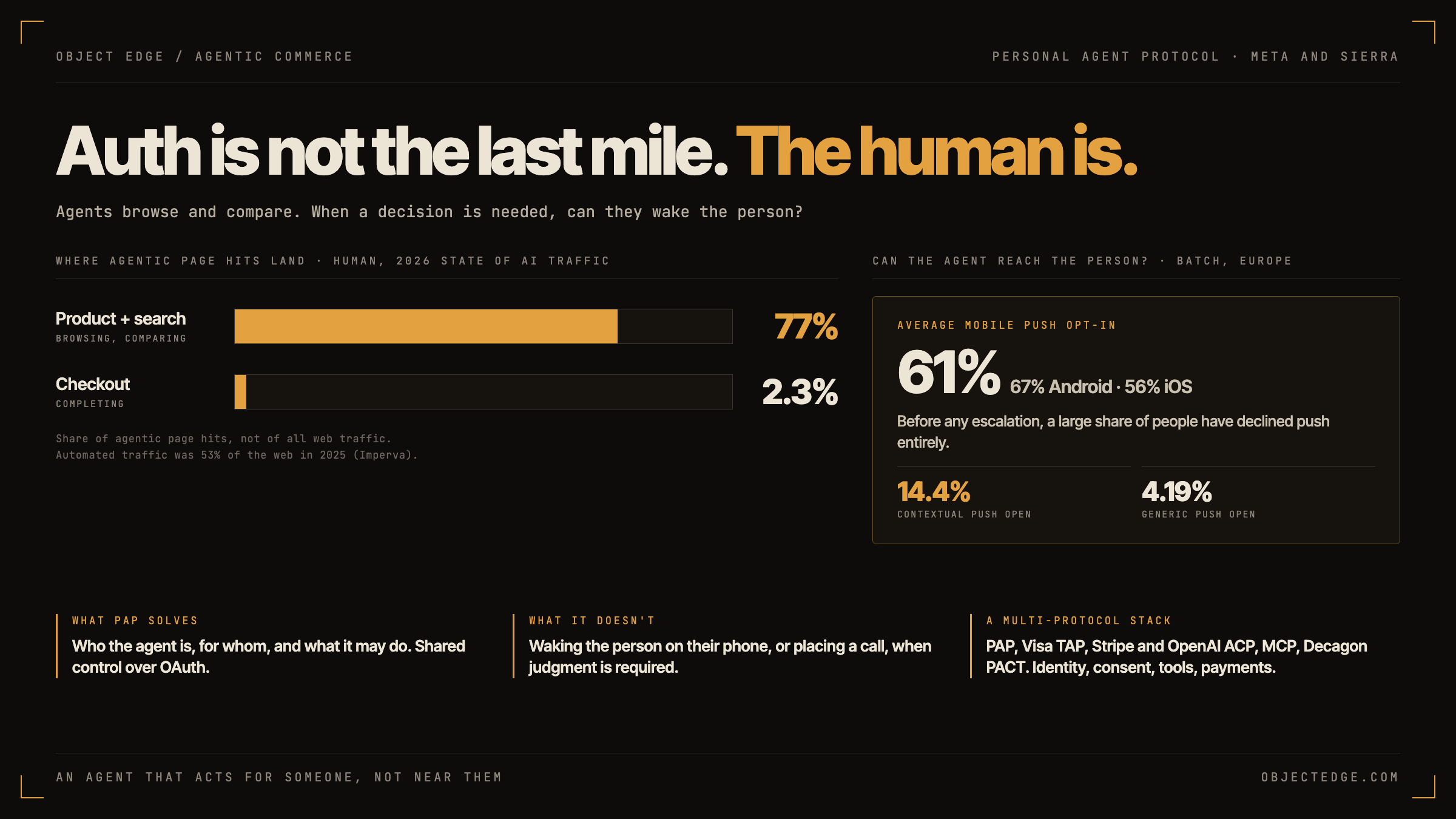
Meta and Sierra's Personal Agent Protocol standardizes how personal AI agents authenticate to businesses, and every harness will adopt it. The harder problem is the last mile: when judgment is required, can the agent reach the person on their phone, or place a call?
-
ai
Harvey's Margin Swing Is a Tokenomics Story, Not Only a Legal-AI Story
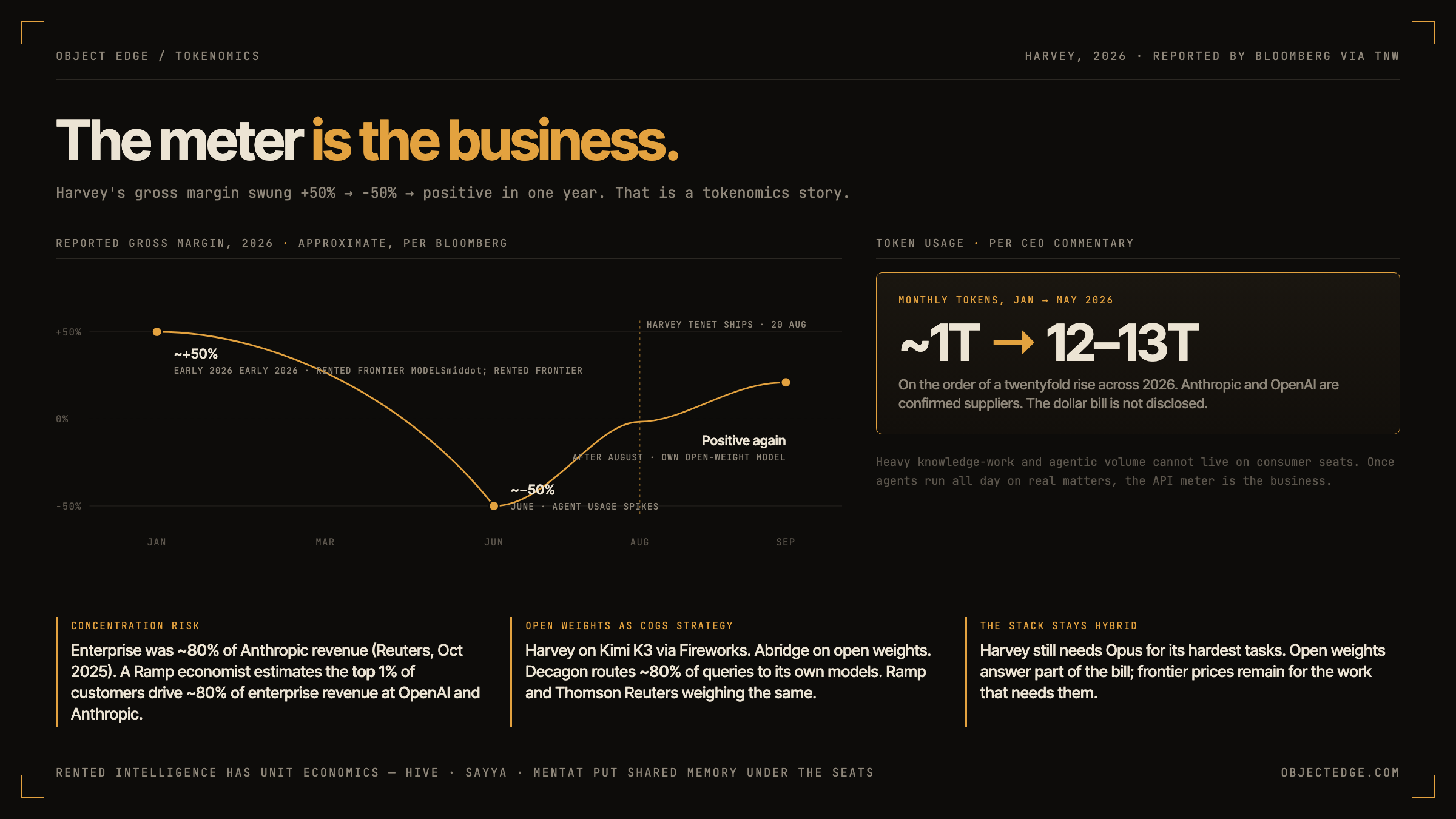
Harvey's gross margin went from about +50% to about -50% and back positive in 2026 as agent usage spiked on rented frontier models, then moved onto its own open-weight model. What that swing says about metered knowledge work, revenue concentration at Anthropic and OpenAI, and open weights as a cost-of-goods strategy.
-
ai
AI-Native Services Are a Real Market. Enterprise Still Needs a Company Brain.
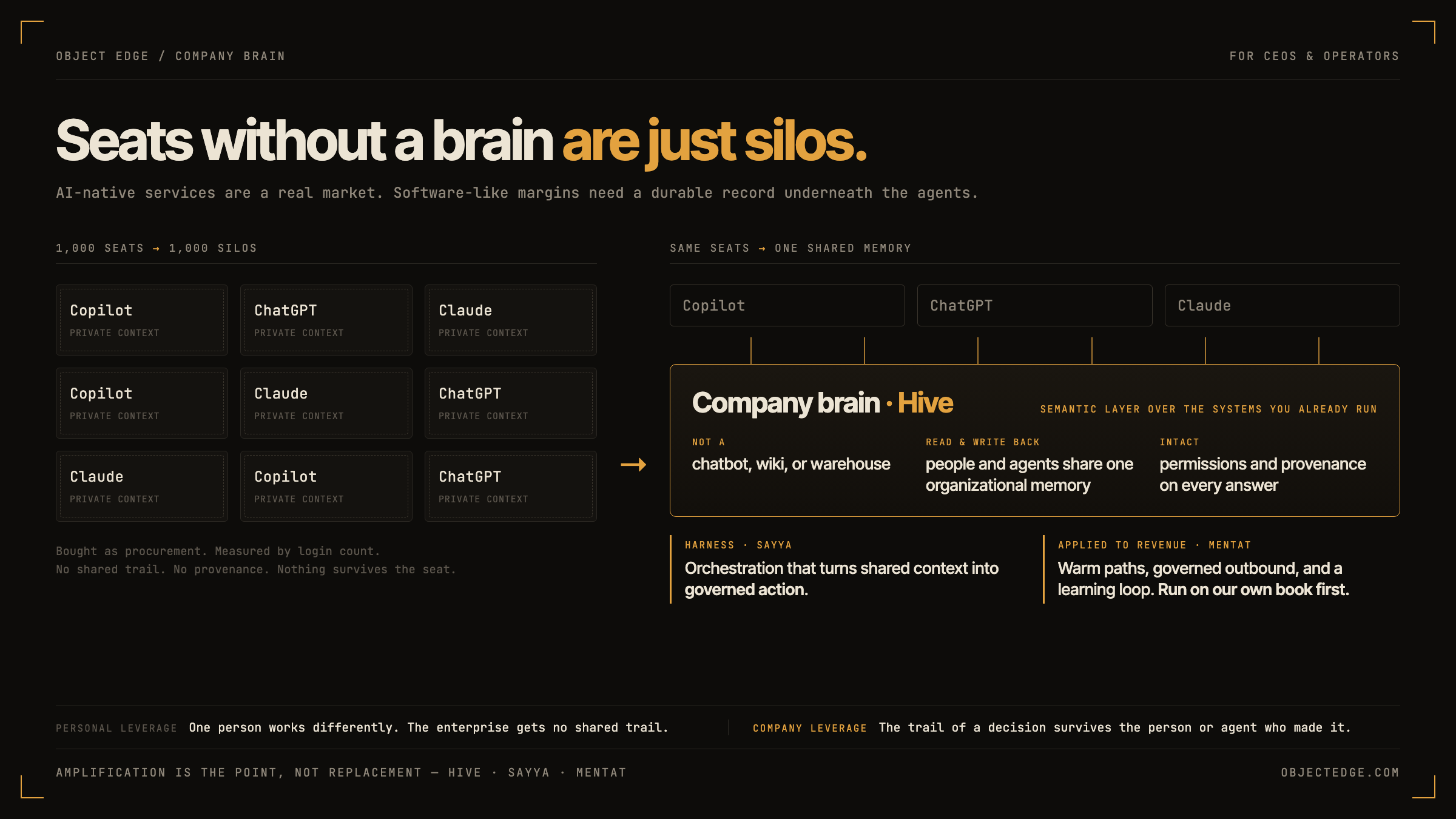
Greg Isenberg's $100B AI-native services thesis is right about the market. The operator question is whether the enterprise keeps a durable record under its agents. Without one, a thousand AI seats become a thousand silos.