ai
Software isn't dead. Knowing what to build is still the hard part.
Software has been declared dead roughly once a decade (Santiago, @svpino on X, 20 October 2026).
In 1994 the advice was that programming was for nerds and you should become a doctor or a lawyer. In 2004 it was that someone in India would take your job for $5 an hour. In 2014 it was no-code. Now it is AI.
It is interesting, and I believe he is right about the pattern. His point is about programming as a career, and every one of those predictions underestimated how much the world still needed people who can build.
I want to take his point one step further, from the career to the thing itself. I don’t believe software is dead either. However, my reason is not that AI is overhyped, or that it can’t write good code. It can. My reason is that writing the code was never the hardest part of building software that matters.
Can’t anyone vibe code almost anything now?
Mostly, yes, and I don’t say that grudgingly. People can vibe code a tremendous amount of great work today. Our own engineers build with Claude Code and Codex every day, and the speed is real.
However, a working demo is not production-ready software, especially once other people have to use it. Something that runs on your laptop for you, with your data and your assumptions, is a very different object from something a team depends on every morning.
That gap is where I think the “software is dead” argument quietly breaks down.
What does production-ready actually mean?
We usually equate production-ready with good code and no bugs. Clean architecture, tests passing, nothing falling over in front of the customer. Those things matter, and AI is getting very good at helping with them.
I have come to think production-readiness sits upstream of all that.
So what is production-ready? To me, it’s understanding a domain so deeply that you know everything the system needs in order to actually run. Who uses it, and what they are trying to get done. What happens when it fails at two in the morning. Who is allowed to see which data, and how you would prove it later. How information gets in, how it gets back out, and where people will give up because one step has too much friction.
Those are domain questions before they are code questions. A model can answer them well once you know to ask. The hard part is knowing to ask.
What does that look like for a knowledge graph?
The example I know best is Hive, the knowledge graph and semantic layer we build at Object Edge. In plain terms, it is a company brain: a shared, structured memory of a business that people and AI agents can both work from. (Hive is our product, so weigh my enthusiasm accordingly.)
You can probably vibe code a knowledge graph with Claude in a weekend. If all you need is relationships between entities, that may honestly be enough. You could even ask Claude to define an ontology from your data, meaning the model of what things exist in your business and how they relate, and it would do a respectable job.
Then comes all the plumbing.
Six engineers built Hive over roughly a year, and in that time we shipped more than 3,500 features. Very few of those features were hard to code. Almost all of them were hard to know about.
What actually went in was twenty years of Object Edge knowledge and data. It drew on years of ontology and knowledge-graph work, including our work with Palantir. It needed a deep understanding of the edge cases around observability, traceability and security, because a company brain that nobody can audit is a liability rather than an asset.
It also needed a lot of unglamorous work on removing friction so people would actually use it, and on getting data back out, not only in. It needed modern agentic-harness design, so agents can act on that memory with the right guardrails. And it needed working with the major labs so the context their models already have is leveraged instead of duplicated.
None of that shows up in a weekend prototype. All of it shows up the first week real people depend on the system.
Is the software even the point?
Not really, and this is the part I think gets lost.
The outcome is what matters. The knowledge graph is one ingredient, and even the product as a whole is one ingredient, in cooking the outcome a business actually wants: better decisions, less rework, revenue that doesn’t leak through the cracks between teams.
Software that means anything, meaning software that is part of a critical workflow delivering value, needs far more than an absence of bugs. It needs a holistic understanding of its domain: the people, the process, the data, the failure modes and the incentives around it.
In other words, the code is the visible part of a much larger body of judgment. AI has made the visible part dramatically cheaper. It has not made the judgment cheaper at the same rate.
Why can’t a smart client just build it themselves?
Our clients are as smart as we are, and many of their engineers are excellent. I want to be clear about that, because the usual services argument quietly implies otherwise.
What they lack is not intelligence or tooling. It’s the domain knowledge of what to build. Nobody has spent years inside that particular problem, collecting the edge cases one painful incident at a time.
AI really has compressed the building. My own estimate is that without Claude Code and Codex, Hive would have taken us four to five years. With them, it took nine to twelve months.
This is the good news.
However, the tools compress the typing far more than they compress the learning.
My estimate, and it is an estimate rather than data, is that what took our team about a year with Claude Code would likely take a client two to three years to reproduce, because they would have to discover the same edge cases we already paid for. Even as models get smarter, I suspect it would still take six to twelve months to catch up. That’s because the bottleneck moves from writing code to knowing which code deserves to exist.
That, I have come to think, is the whole difference between software that demos well and software that runs a business.
So when should you build instead of buy?
If building is cheap and knowing is expensive, the build-versus-buy question gets sharper, not easier.
The test I use is simple. Is this software critical, part of your secret sauce and differentiation? Or are you spending resources rebuilding something solved, when those resources should be going into what makes you different?
That is why Object Edge doesn’t build its own CRM. We could probably vibe code a passable one. However, every engineering day we have should be spent differentiating us from our competitors, not rebuilding something we can buy off the shelf for about $1,000 a quarter.
The same logic applies in reverse. If a system sits at the center of how you win, buying a generic version means renting someone else’s understanding of your domain. In that case, the deep domain knowledge is the product, and that’s what you should be investing in, whether you build it yourself or with a partner who already has it.
What does this mean for the next “software is dead” moment?
I expect there will be another one, probably sooner than ten years from now. Each time, the tools get better and the cost of producing code falls further.
From what I’ve seen, each time the scarce thing has stayed roughly where it was. It’s the person, or the team, who understands a domain well enough to know what the system needs before anyone writes a line.
Santiago’s history is about careers, and I think the lesson holds there too. The people who kept winning after 1994, 2004 and 2014 weren’t simply the fastest typists. They were the ones who understood the problem in front of them better than anyone else in the room.
Software isn’t dead. Understanding is still the job, and it still belongs to people who take the time to learn how other people actually work.
Sources
- Santiago (@svpino), post on X, 20 October 2026: https://x.com/svpino/status/2112517943582196053
Related articles
-
ai
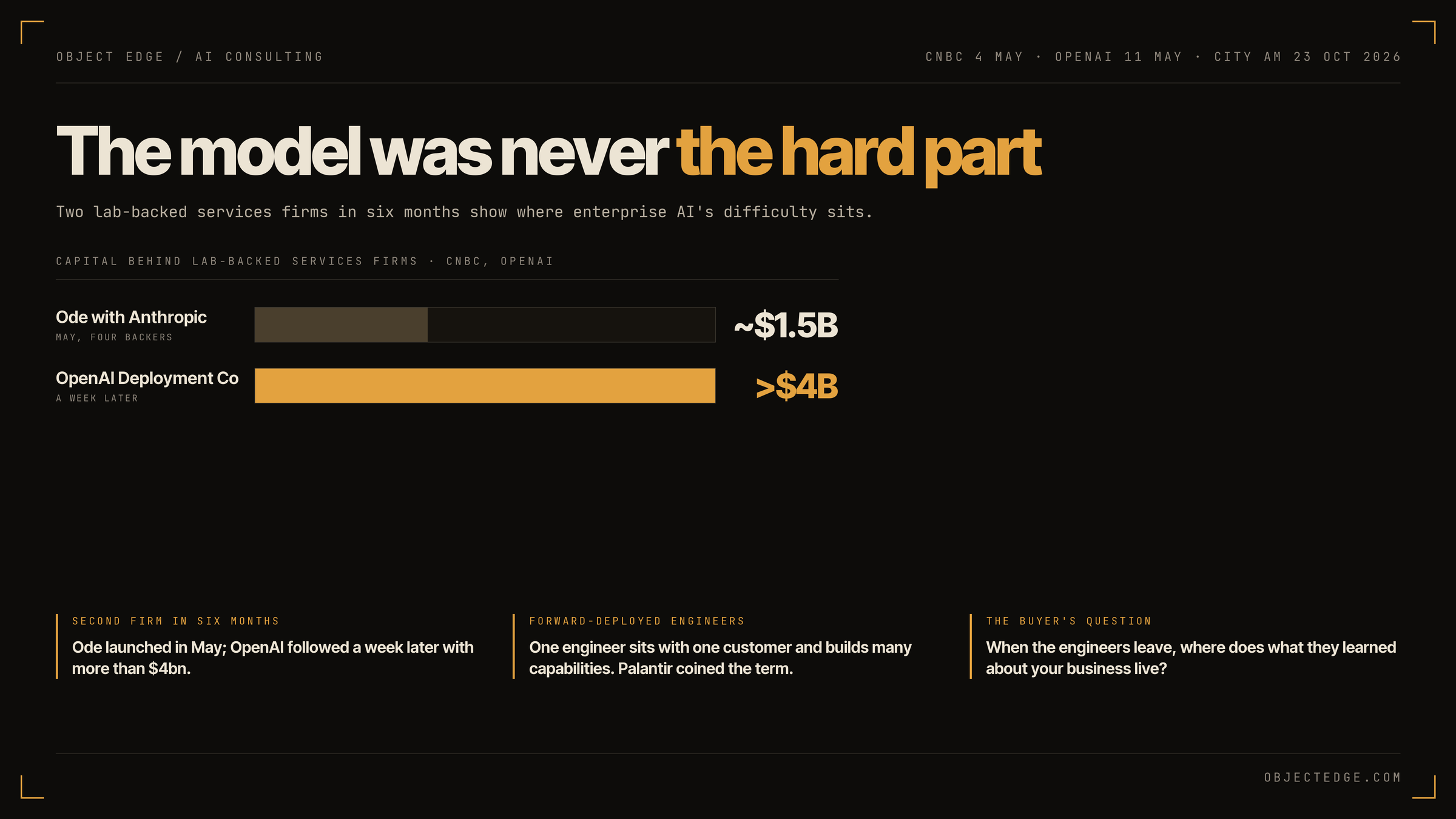
Anthropic is reportedly building a consultancy. The model was never the hard part.
Anthropic and Hg, the UK buyout group, are reportedly creating an independent company that will embed AI consultants and engineers inside European businesses
-
ai
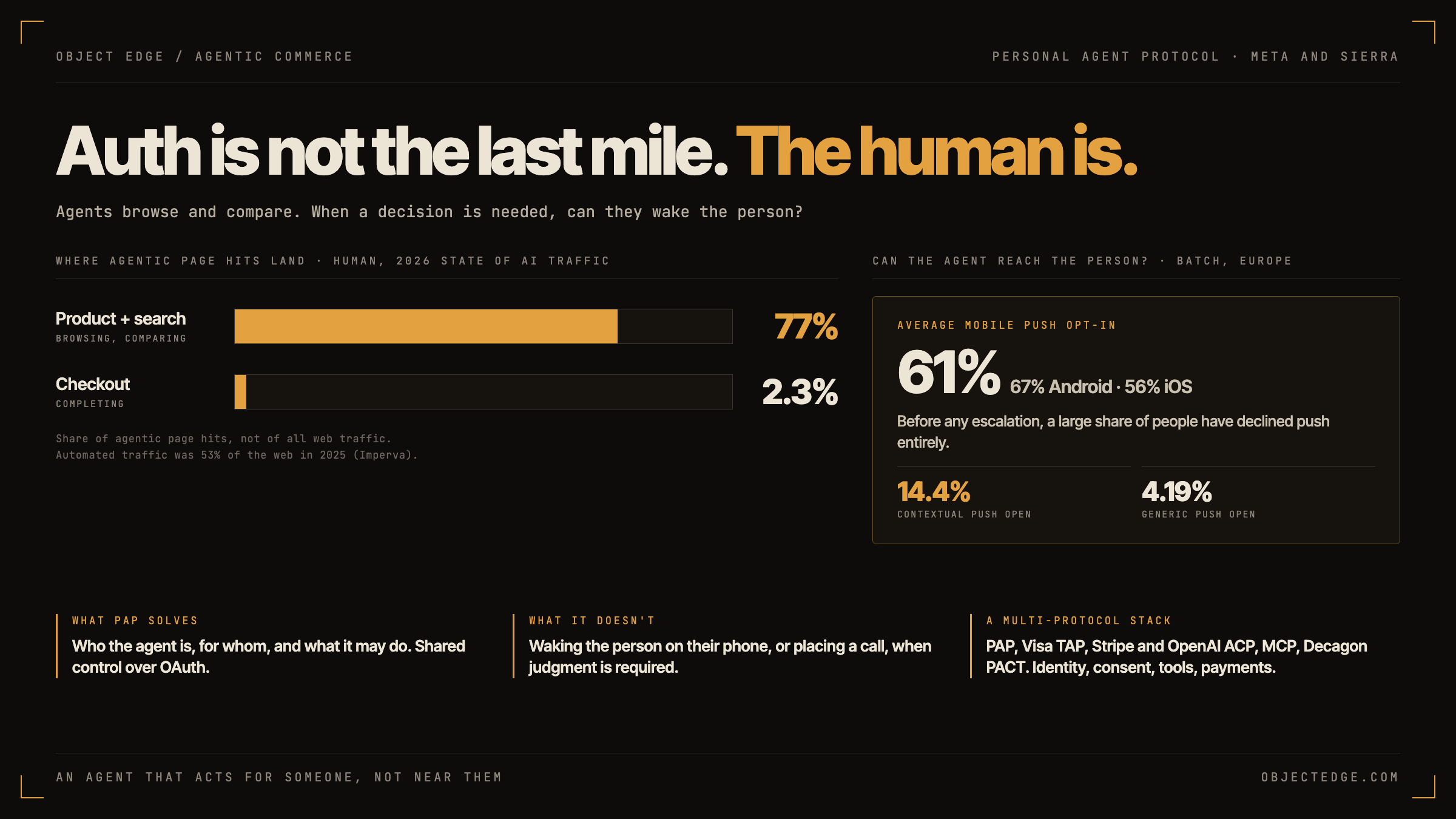
Every Harness Will Adopt Personal Agent Protocol. That Is Not the Hard Part.
Meta and Sierra's Personal Agent Protocol standardizes how personal AI agents authenticate to businesses, and every harness will adopt it. The harder problem is the last mile: when judgment is required, can the agent reach the person on their phone, or place a call?
-
ai
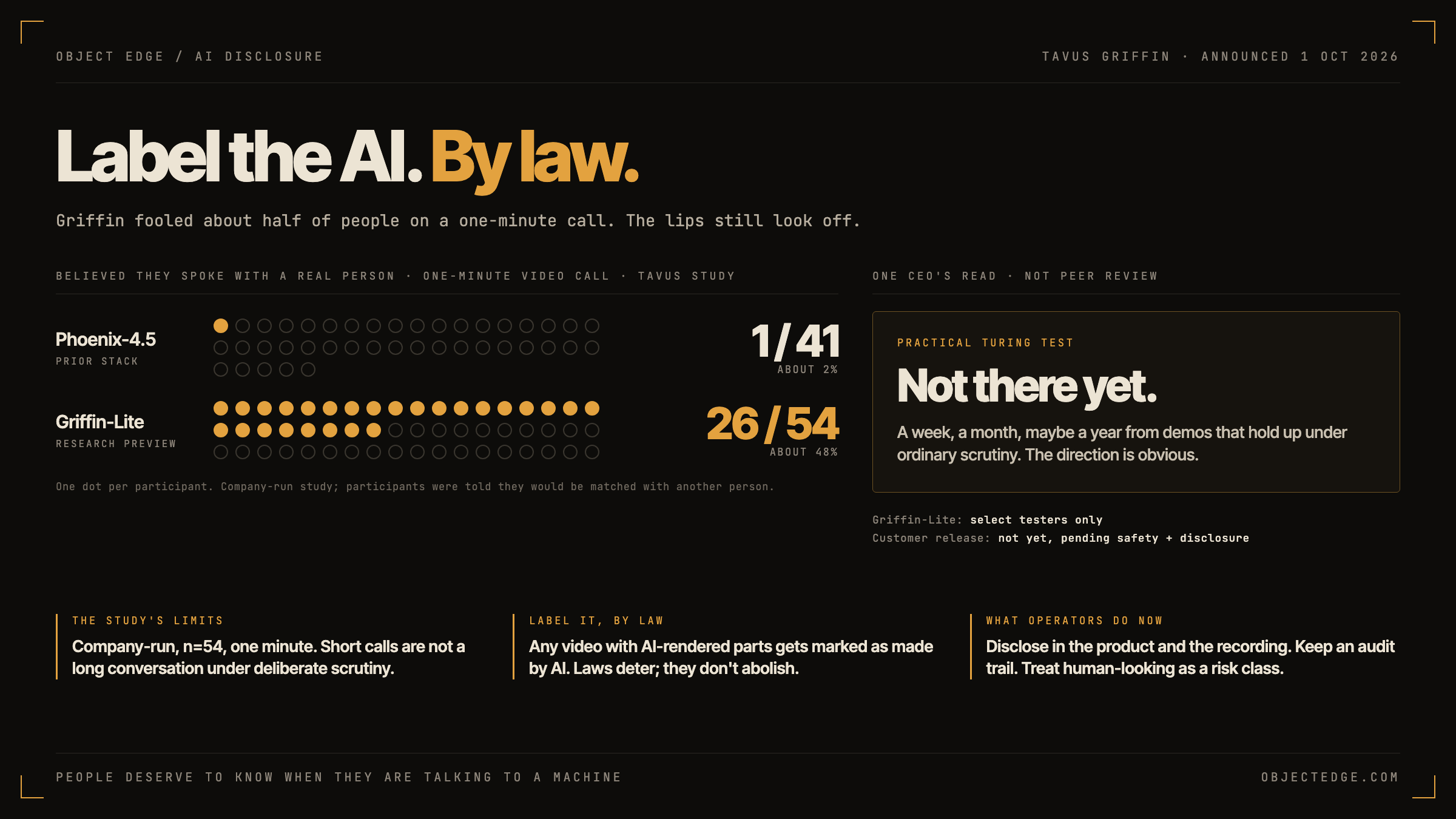
Griffin's 'Video Turing Test' Is Less Interesting Than What We Do While the Demos Still Look Unfinished
Tavus says its Griffin model fooled 26 of 54 people, about 48%, on a one-minute video call. The lips still look off and the study is small, but the direction is obvious. Why all AI-generated video should be labeled by law, and what operators should do before the law catches up.