engineering
The Long Road to Forward Deployed: A Field Guide for the Rest of Us
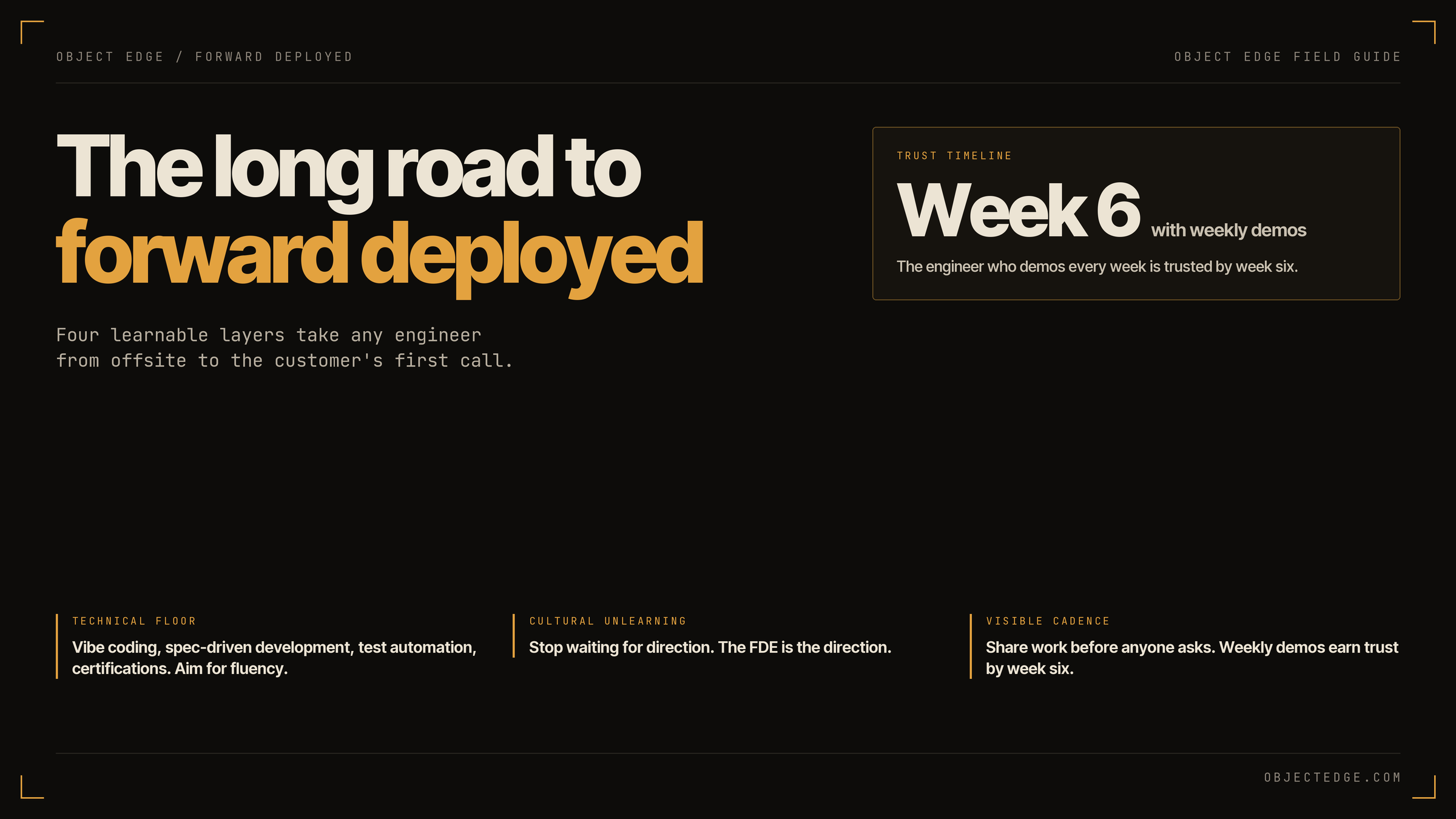
The forward deployed engineer sits in a strange seat. Half engineer, half consultant, half translator between what a customer says they want and what their business actually needs. It’s the role every services company is quietly reorganizing around — and it’s the role most of us were never trained for.
If you’re a developer, a tester, a project manager, or a business analyst sitting in another country, working in a second (or third) language, the distance between where you are and that seat looks enormous. It is enormous. But it is crossable. This is a map of the crossing.
The reframe: you’re not climbing, you’re redefining
The first thing to understand is that becoming an FDE is not a promotion from your current role. It’s a redefinition of it. A developer who becomes an FDE doesn’t stop writing code — they stop writing code as the job and start writing it as one tool among many. The job becomes: own the outcome at the customer, by whatever means the situation demands.
That reframe matters because it changes what you practice. You’re not practicing to be a better developer. You’re practicing to be the person the customer calls first.
Layer one: the technical floor
There’s no escaping this one — the FDE role sits on a technical foundation that keeps rising. A few things that belong in your kit:
Vibe coding, used deliberately. AI-assisted development is not a shortcut for the unskilled; it’s an amplifier for the skilled. Learn to work with AI pair-programmers the way you learned to work with compilers and linters — as something you direct, verify, and override. The FDE who can prototype a solution in front of a customer in an afternoon is worth three who need a sprint.
Spec-driven development. When you’re customer-facing, the most expensive failure is building the right thing wrong or the wrong thing right. Spec-driven development — writing the specification as a first-class artifact that humans and machines both execute against — is how you make requirements verifiable before they become rework.
Test automation as a habit, not a phase. If you come from testing, this is your unfair advantage. Own it. The FDE who can stand in front of a customer and say “here’s the evidence it works” — with automated tests, not assurances — builds trust at a speed manual QA never could.
Certifications as forcing functions. An Anthropic certification, a cloud architecture path on AWS, GCP, or Azure — the credential itself matters less than the structured syllabus. Pick one cloud and go deep; learn the others well enough to translate. Customers live on all of them.
The point of the technical floor is not mastery of everything. It’s fluency — enough range that no part of a customer’s stack intimidates you into silence.
Layer two: the cultural unlearning
Here is the part nobody puts in a job description. For many of us, the hardest work isn’t technical at all — it’s unlearning habits our education and our workplaces rewarded for years.
The biggest one: waiting for direction. If you grew up in a work culture where the correct behavior is to receive a task, execute it precisely, and escalate every ambiguity upward, the FDE role will feel wrong at first. It’s supposed to. The FDE is the direction. The customer’s problem arrives vague, political, and half-articulated, and your job is to make it concrete.
Books help here more than they get credit for. The 7 Habits of Highly Effective People is not a cliché for this journey — “be proactive” and “begin with the end in mind” are literally the job description of a forward deployed engineer, written forty years early.
And then there’s the agile inheritance. Not the ceremonies — the principles. Transparency, inspection, and adaptation aren’t meeting rules; they’re how you behave when you’re alone at a customer site with a problem that changed shape overnight. The Scrum values — commitment, courage, focus, openness, respect — read like a personality spec for the role. Courage especially. It takes courage to tell a customer “that won’t work, and here’s what will” in your second language.
Layer three: the human layer
You are moving from offsite work, where your output speaks for you, to engagements where you speak for your output. That’s a different skill family entirely:
- Communication, in a non-native language, under pressure, with people who don’t share your context. Practice out loud. Record yourself. It’s uncomfortable, which is exactly why it works.
- Presentation — not performing, but structuring. A demo with a clear beginning, middle, and end beats a brilliant ramble every time.
- Emotional skills — reading a room, noticing when the stakeholder who asked the question isn’t the one who owns the decision, managing your own frustration when the fifth requirement change lands.
- Stakeholder management — knowing who wants what, who fears what, and who hasn’t said anything yet but will.
None of this is soft. In a customer-facing engagement, it’s the hard part.
The cadence: how the work becomes visible
Finally, the rhythm. The single highest-leverage habit for the crossing is this: share your work before anyone asks.
A daily update — what I did, what I learned, what’s blocked. A weekly synthesis — where the engagement stands, what changed, what’s next. And demos: show working functionality, early and often. Not because anyone demands it, but because visibility is how trust compounds. The engineer who demos every week is trusted by week six. The engineer who goes quiet and delivers a masterpiece at the end is trusted by nobody until it works — and sometimes not even then.
For someone raised in a culture where self-promotion feels immodest, this is the last and strangest unlearning: sharing your work daily isn’t boasting. It’s transparency. It’s the inspection pillar, applied to yourself.
The long road, walked
So: the technical floor, the cultural unlearning, the human layer, the visible cadence. It’s a long road. Months of it, honestly years of it. But every piece of it is learnable, and none of it requires you to have been born anywhere in particular or to speak English as a first language.
The forward deployed engineer of the next decade will look like the world’s actual engineers — from everywhere, speaking every language, carrying a laptop and the 7 Habits. The road is long. Walk it anyway.
Related articles
-
engineering
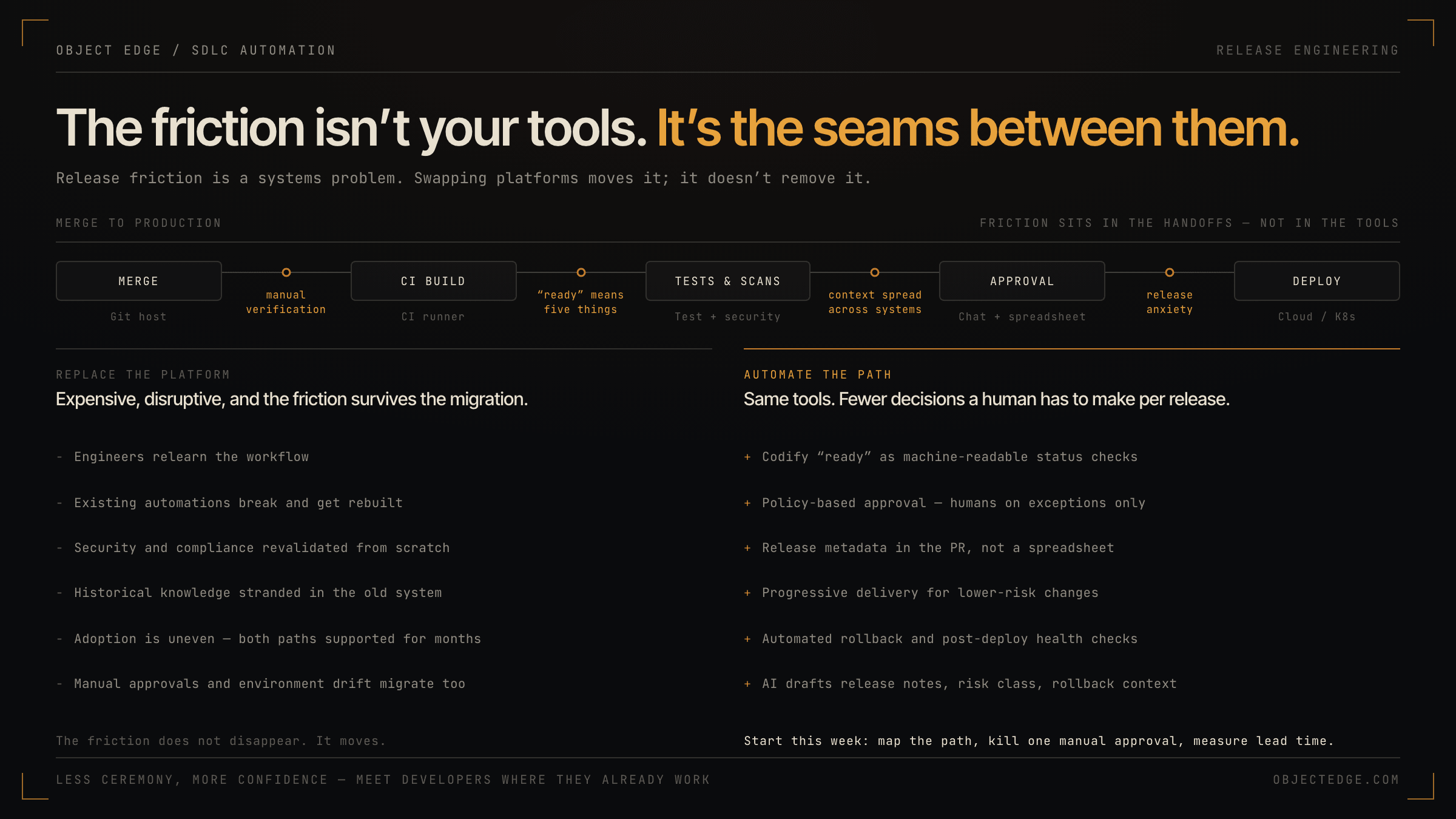
Why the Fastest Way to Reduce Release Friction Is Not Replacing Your Dev Tools
Cut release friction by improving the handoffs, checks, and automation around your existing tools instead of forcing a platform swap.
-
ai
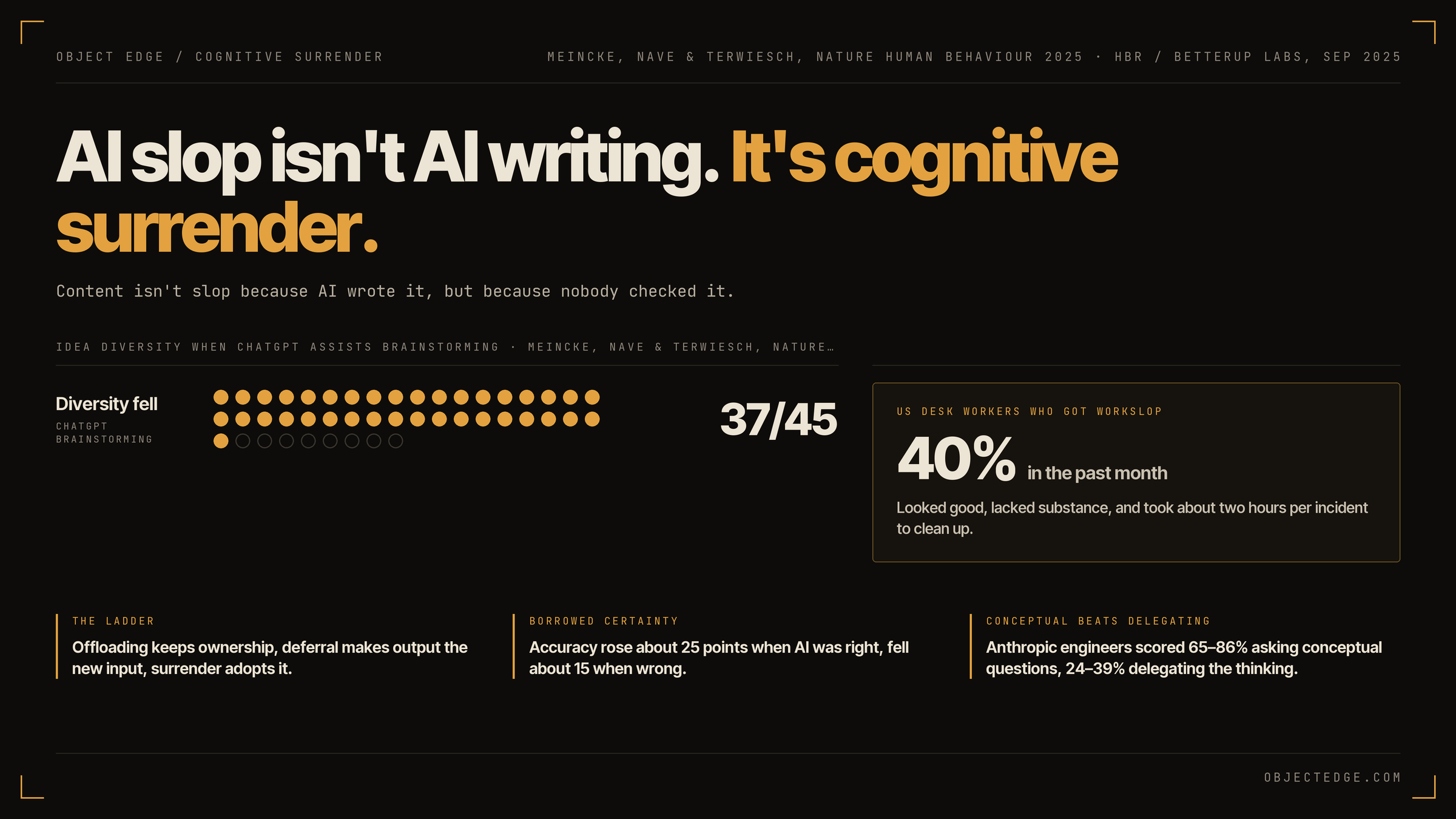
AI slop isn't AI writing. It's cognitive surrender.
AI writing is efficiency; slop is cognitive surrender. What the research from Osmani, Shaw and Nave says about keeping your own judgment when using AI.
-
ai
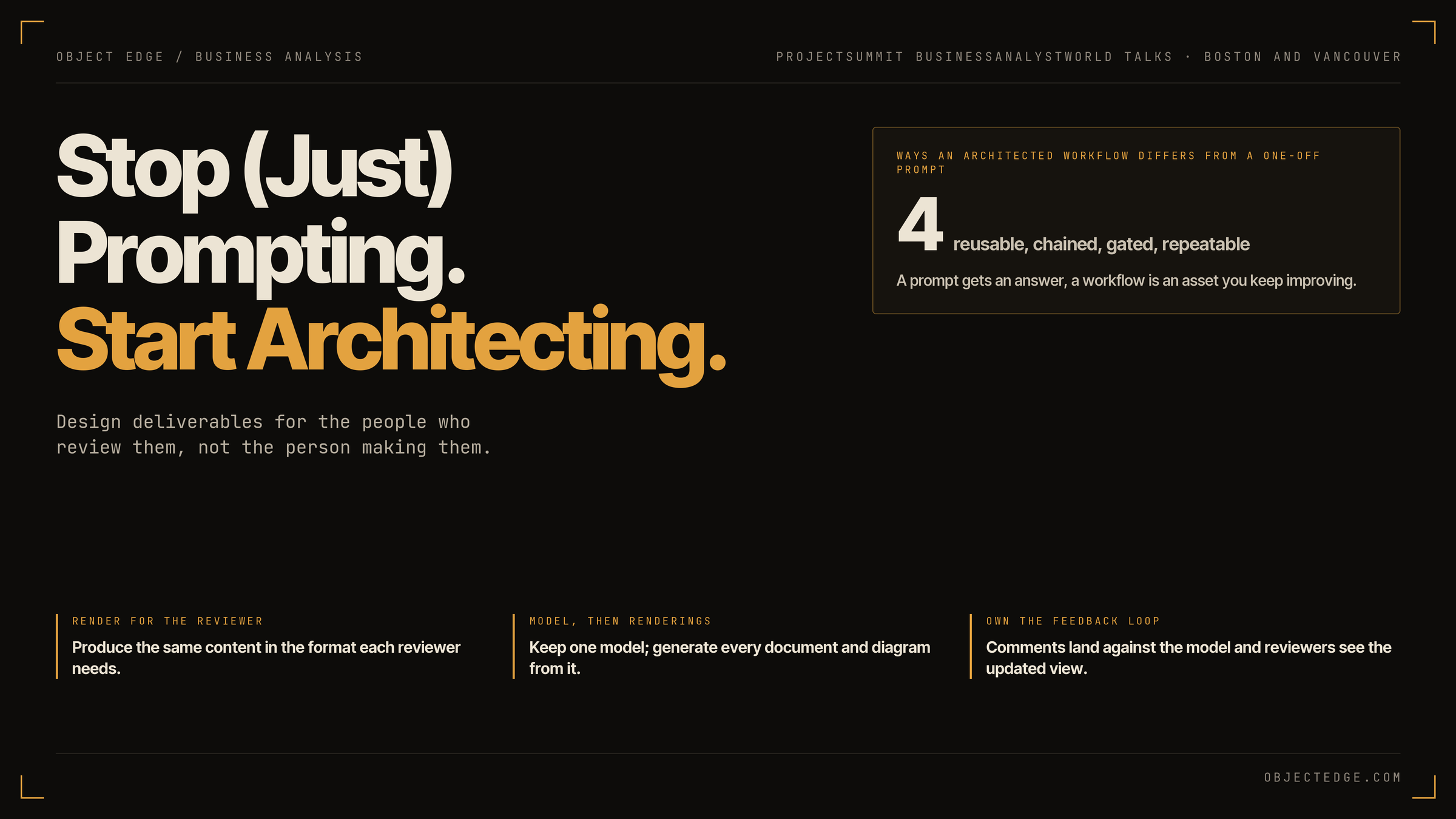
Stop (Just) Prompting. Start Architecting.
A business analyst's guide to going beyond prompting: design deliverables for stakeholders, separate the model from its renderings, and own the feedback loop.