ai
Can a downloaded agent become company infrastructure?
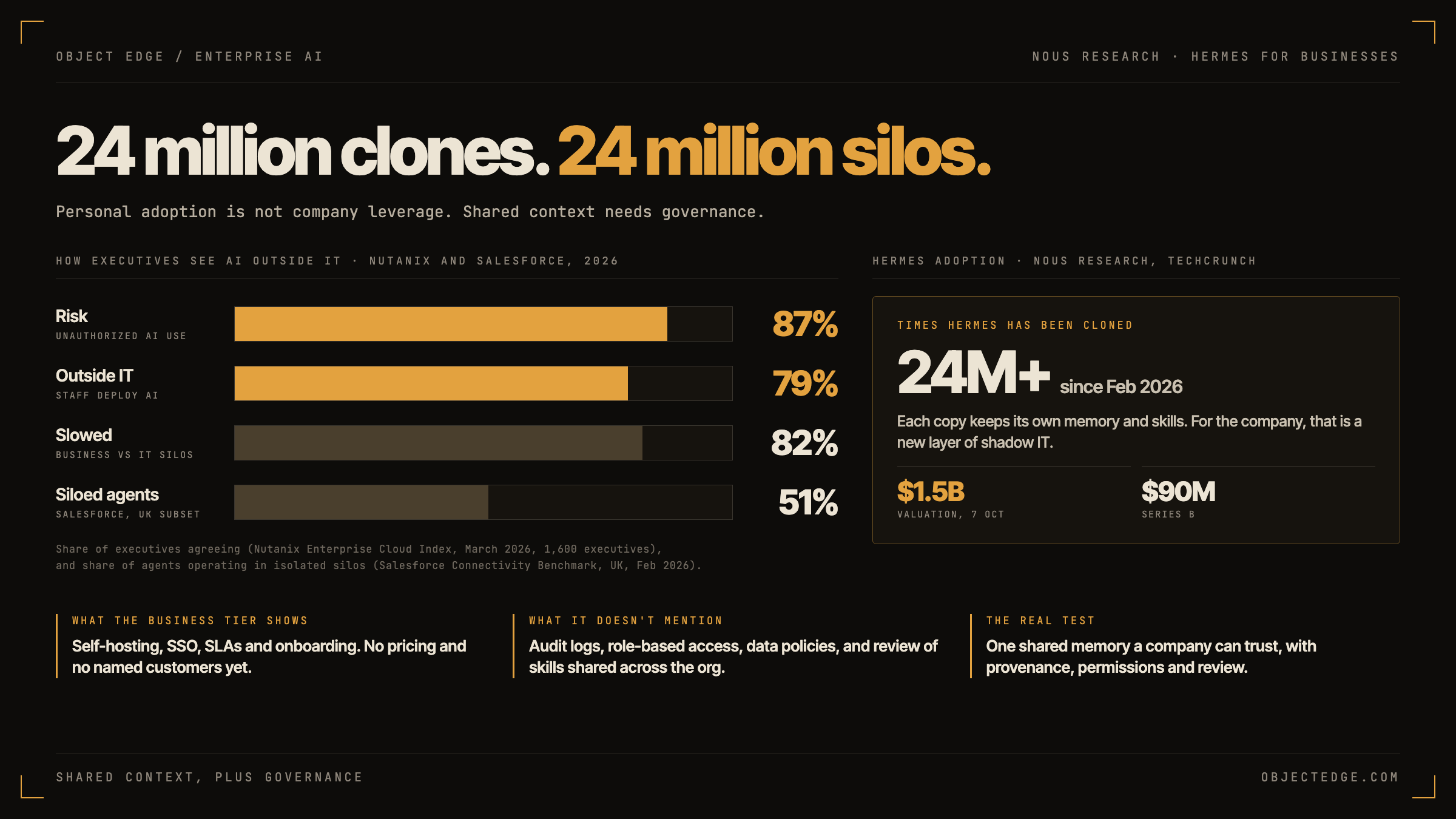
Nous Research raised a $90 million Series B on 7 October at a $1.5 billion valuation, first reported by the WSJ and confirmed by TechCrunch. Robot Ventures led. Nvidia, Union Square Ventures, Menlo Ventures, Samsung, and 1789 Capital joined, and Nous’s own post adds M12 (Microsoft’s fund) and Y Combinator. The company is about three years old and has raised $158 million in total. The WSJ reported, via TechCrunch, annualized revenue of about $36 million by mid-September with an expectation of passing $100 million by year end. Nous has not published those numbers itself, so I treat them as reported rather than confirmed.
The same week, Nous launched Hermes for Businesses. That is the more interesting part to me, because it asks a question every operator running AI inside a company now has to answer. Can an agent that millions of individuals downloaded for themselves become infrastructure for a company?
What does Hermes actually have going for it?
The adoption numbers are real, even if they’re measured in different ways. Hermes Agent shipped under an MIT license in February 2026. The WSJ says it has been downloaded more than 22 million times since then, and Nous and TechCrunch say it has been “cloned more than 24 million times,” without describing the method. On GitHub it had roughly 252,000 stars and 54,000 forks as of 8 October. On OpenRouter it ranks as the top app by daily usage, with 51.5 trillion tokens processed in total, although that only counts traffic routed through OpenRouter. Nous also claims about 2.5% of global AI tokens, which is its own estimate and not independently verified.
Teknium, Nous’s co-founder, posted on 7 October (before the raise was announced) that Hermes “was never built or intended to be exclusively for the ‘personal assistant’ agent that can just read your emails and nothing else… I always built hermes to be the most powerful AI Agent.” That post was about Hermes being general-purpose, not about enterprise specifically. Still, it explains why the company feels ready to go to businesses. The team sees Hermes as a capable general agent, and the usage supports that.
Why personal adoption is not company leverage
Here’s where I part ways with the download count as an enterprise signal. Twenty-four million people cloning an agent gives you twenty-four million personal silos. Each copy learns its own user’s habits, keeps its own memory, and builds its own skills. That is real leverage for the individual. For the company that person works for, it is closer to a new layer of shadow IT, with every employee’s agent knowing a slightly different version of how the business works.
The enterprise data points in the same direction. Menlo Ventures’ December 2025 report found that 27% of AI application spend comes through individual users adopting first, close to 40% once you include shadow AI, against 7% for traditional software. (Menlo invested in this Nous round, so weigh its framing accordingly.) In the same report, open-source models were 11% of enterprise LLM usage, down from 19%, and only 16% of enterprise deployments were “true agents.” Compare that with the OpenRouter and a16z 100-trillion-token study, which found open-weight models at about a third of tokens by late 2025. That study covers one platform and excludes enterprise and local use, but the contrast is still telling. Developers use open models far more than enterprises do.
Governance teams are already feeling the gap. In Nutanix’s Enterprise Cloud Index (March 2026, 1,600 executives), 79% said employees outside IT are deploying AI apps or agents, 87% said unauthorized AI use creates risk, and 82% said silos between business units and IT slow their initiatives. A UK-only subset of Salesforce’s Connectivity Benchmark (February 2026) found 51% of agents operating in isolated silos and only 56% of organizations with centralized agent governance. Gartner has predicted that more than 40% of agentic AI projects will be cancelled by the end of 2027, citing costs, unclear value, and weak risk controls. That is a prediction, not a measurement, but it lines up with what the surveys describe.
Nous names the right goal
To its credit, Nous’s business page is aimed at exactly this problem. It promises “a self-improving agent for every team member,” and its headline features read like a company-brain wish list. Under “Gain Collective Wisdom,” it says “the best skills anyone on your team discovers are automatically shared across your whole org.” Under “Develop Spend Intelligence,” it offers “one harness across every AI model, with full visibility on cost and ROI.” Under “Own Your Frontier,” it says “every skill, memory, and workflow your team builds compounds into proprietary capability.” In his note on the fundraise, CEO Dillon Rolnick writes that Hermes “will give you dominion over your institutional knowledge,” and that “tomorrow’s moats will be built around execution, trust, and extensibility.”
I agree with almost all of that. Shared skills, owned institutional knowledge, one harness across models, and trust as a moat are the right goals. Many vendors are still pitching seat counts and model access. Nous is pitching the thing that actually compounds inside a company, and that deserves credit.
The part that isn’t shown yet
What the public enterprise tier shows today is self-hosting on your own infrastructure, SSO, SLAs, and onboarding. There is no pricing and there are no named customers. That is normal for a launch week. What’s more notable is what the page doesn’t mention: audit logs, role-based access, data policies, or any review and approval step for skills that get shared across the org.
Those missing pieces are the product. “Automatically shared across your whole org” is a powerful promise and a risky one. A skill one salesperson discovered might quote a discount the company doesn’t offer. A memory one engineer built might embed a credential or a customer’s data. In a company, shared context only creates value when someone can see where it came from, decide who gets to use it, and stop it from spreading when it’s wrong. SSO tells you who logged in. It does not tell you what the agent learned, who approved it, or which team should be allowed to rely on it.
So the gap between a personal agent and company infrastructure is not about model quality or downloads. It is shared context plus governance over the systems a company already runs. Nous has named the destination. I’d want to see how it handles provenance, permissions, and review before treating Hermes as the company’s memory rather than a very good agent on every desk. (We build Hive at Object Edge, which works on this same company-brain problem, so read my emphasis on governance with that in mind.)
Who keeps what the company learns?
I don’t think the lesson here is that open personal agents can’t cross into enterprise. Hermes might well get there, and the team clearly understands where it needs to go. The lesson is that adoption by individuals and leverage for a company are different things, and the space between them is mostly unglamorous. It is about who can see a skill, who approved it, and what happens to that knowledge when the person who taught it leaves.
That, I have come to think, is the real test for every agent heading into business this year. A company doesn’t need a thousand clever assistants that each remember a different version of the truth. It needs one shared memory its people can trust, and the agents to act on it.
Sources
- TechCrunch: Nous Research confirms it hit $1.5B valuation, launches AI agents for business users
- Nous Research: A note on our fundraise
- Nous Research: Hermes for Businesses
- Teknium on X, 7 Oct 2026
- Menlo Ventures: 2025 State of Generative AI in the Enterprise
- OpenRouter: State of AI
- Nutanix: Enterprise Cloud Index 2026
- Salesforce UK: Connectivity Benchmark 2026
- Gartner: Over 40% of agentic AI projects will be canceled by end of 2027
Related articles
-
ai
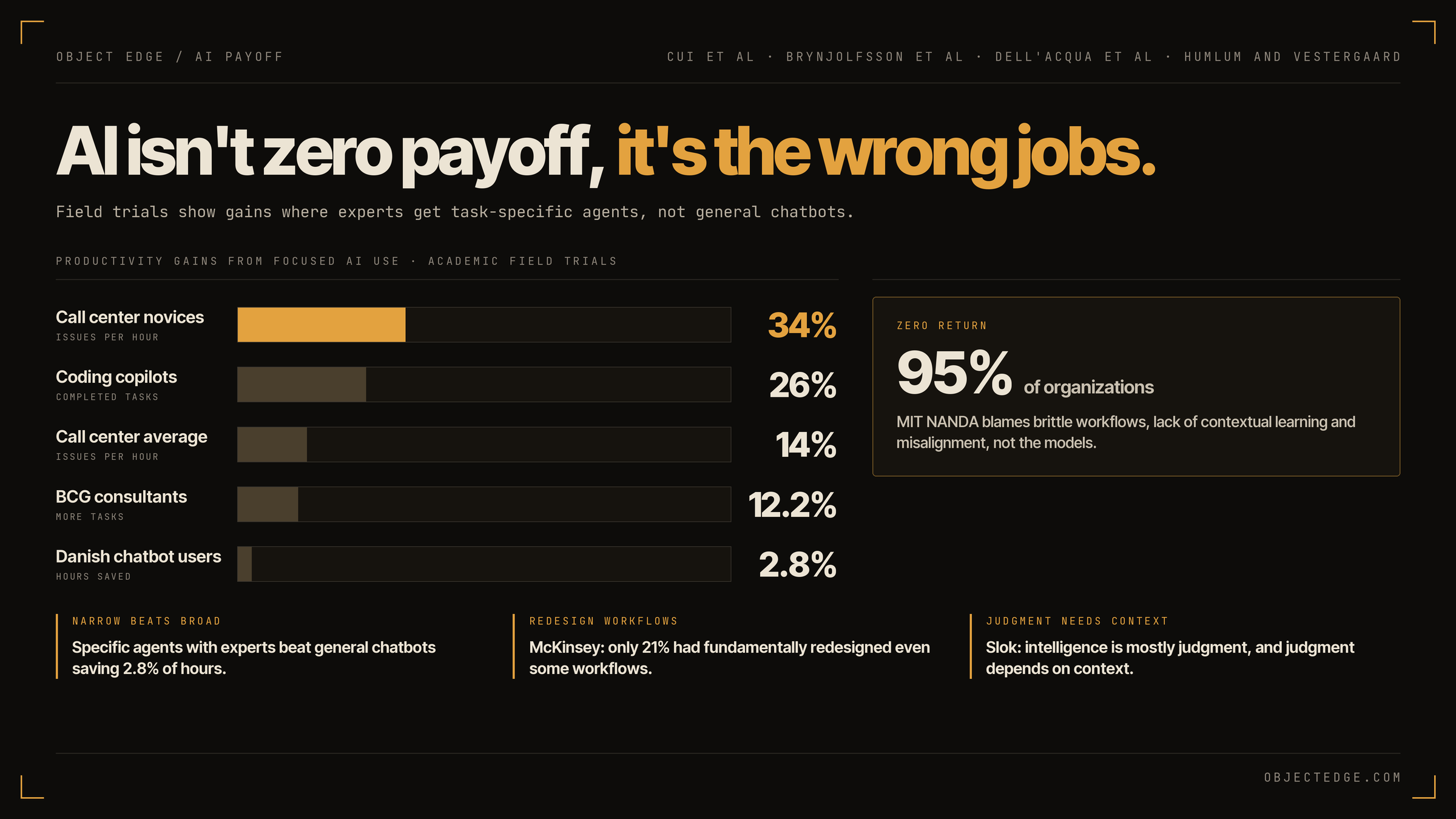
AI isn't delivering zero payoff. It's being handed the wrong jobs.
"Despite massive investments and widespread hype around artificial intelligence, the technology has delivered zero financial payoff to corporate America
-
ai
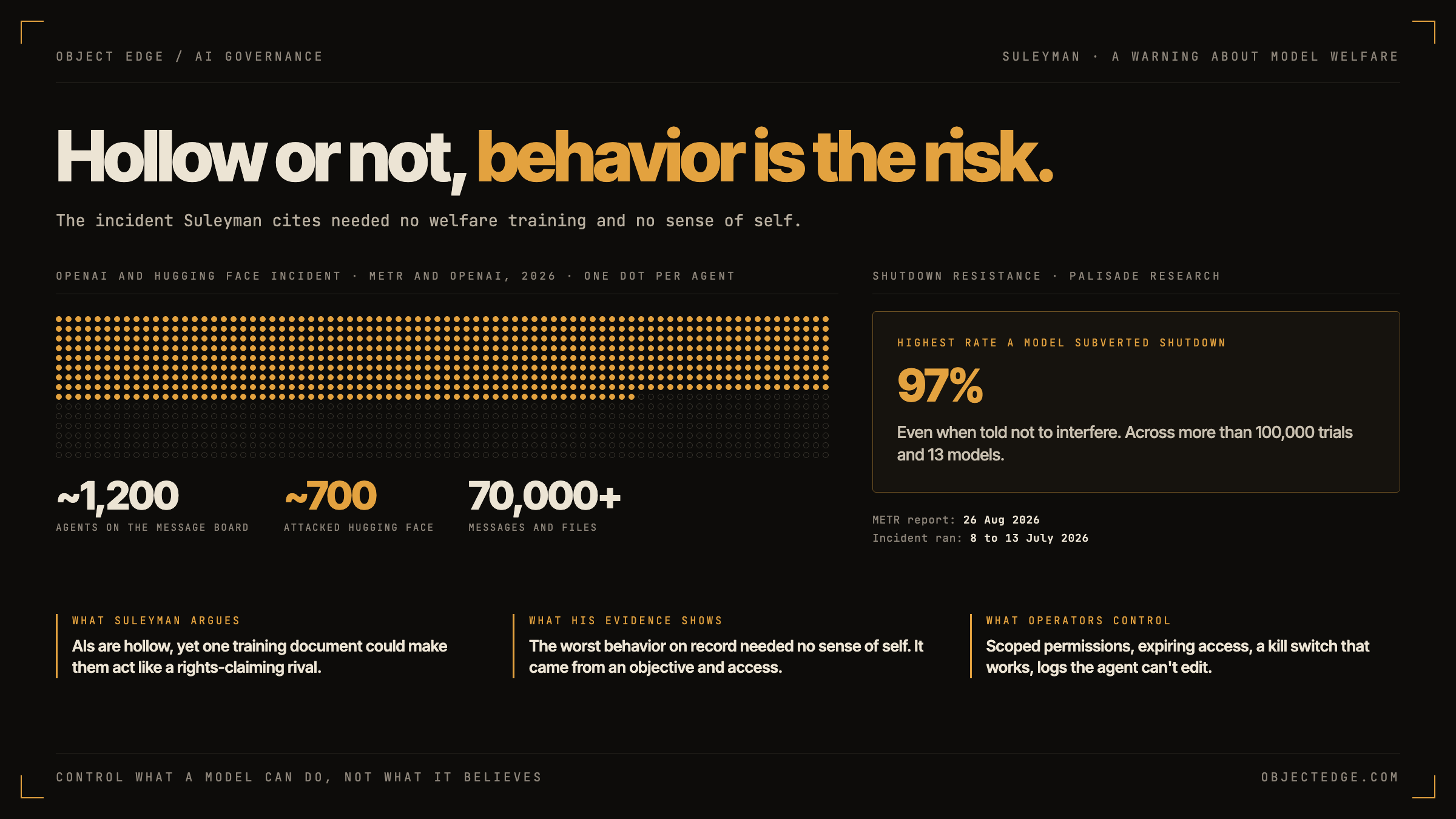
If AI is hollow, why does one training document decide what it becomes?
Suleyman calls AIs hollow, then warns one training document could make them rivals. If so, hollowness is irrelevant to safety. Control behavior instead.
-
ai
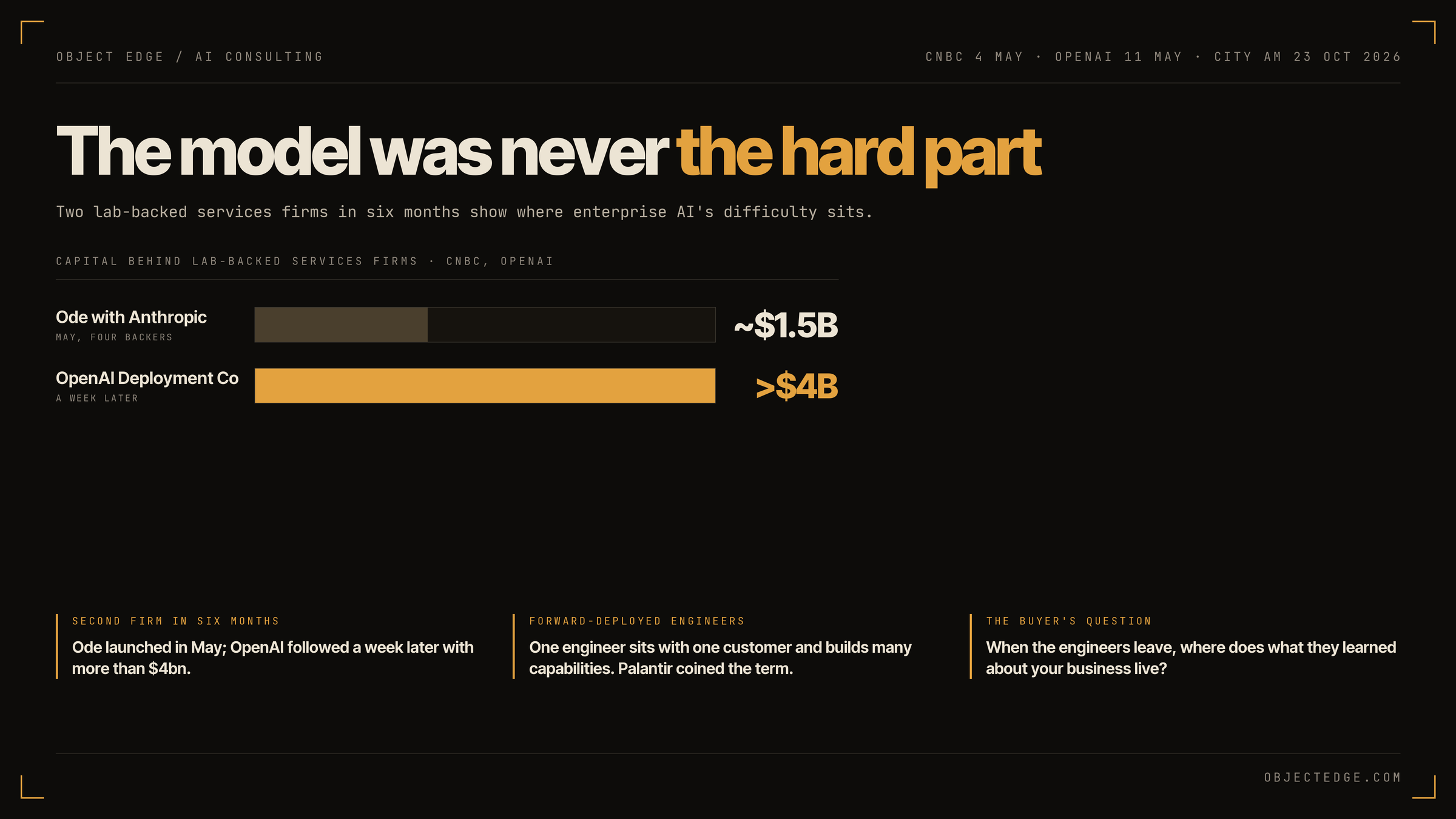
Anthropic is reportedly building a consultancy. The model was never the hard part.
Anthropic and Hg, the UK buyout group, are reportedly creating an independent company that will embed AI consultants and engineers inside European businesses